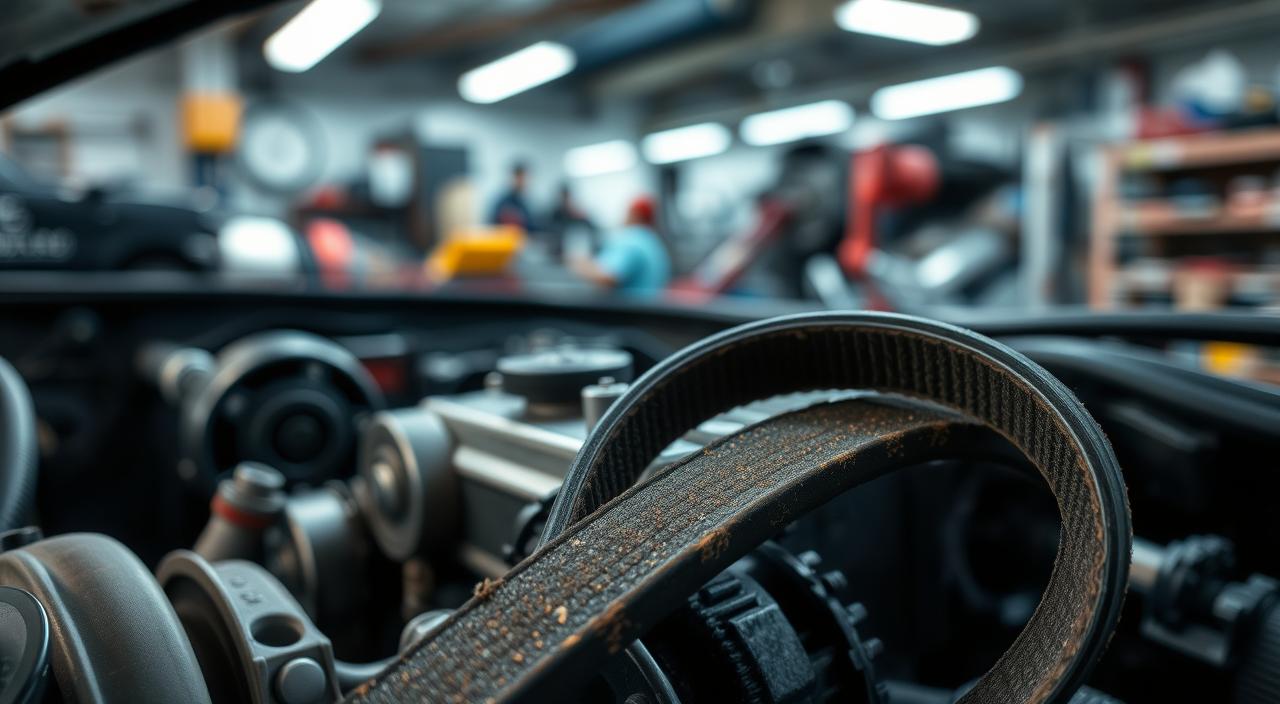
Ever heard a squealing sound from your car’s engine area when you speed up? It’s scary and usually means your engine belt is acting up.
I remember my friend’s car making a high-pitched squeal on the highway. It was because the engine belt was too worn out and needed a new one.
Not fixing this squealing noise can hurt your car’s engine and other parts. In this article, I’ll show you how to find and maybe fix the problem with the engine belt squeal.
Knowing why your car makes a belt noise when accelerating helps you avoid bigger issues.
Understanding Engine Belt Noise
A squealing engine belt is not just annoying. It’s a sign of a bigger problem. Knowing about engine belt noise is very important.
Types of Engine Belts in Modern Vehicles
Today’s cars have two main types of engine belts. Serpentine belts power many parts like the alternator and water pump. Accessory belts drive single parts. Knowing your belt type helps find the noise source.
Normal vs. Abnormal Belt Sounds
Not all belt sounds are bad. Some noises are okay, like when the engine is cold. But loud or constant noises, like squealing or screeching, mean trouble. Issues like misalignment or wear can cause these sounds. It’s important to know the difference.
- Normal sounds: slight chirping or squeaking during startup
- Abnormal sounds: persistent squealing, screeching, or grinding noises
Why You Hear a Squealing Noise From Engine Belt When Accelerating
The squeal from your engine belt when you speed up is not just a bother. It’s a warning that something is wrong. This noise means there’s an issue that needs fixing.
Physics Behind Belt Noise During Acceleration
When you hit the gas, the engine belt works harder. This can make it slip or vibrate, causing a squeal. The belt’s interaction with pulleys is key here. If the belt is too tight or too loose, it might not grip the pulleys right, leading to noise.
Common Causes of Belt Squealing
Several things can make your belt squeal when you speed up. These include:
- Wear and tear on the belt
- Misalignment of pulleys
- Insufficient belt tension
- Presence of debris or contaminants on the belt or pulleys
How Weather and Environmental Conditions Affect Belt Noise
Weather and the environment can really affect your belt’s noise. Cold weather makes belts brittle and more likely to squeal. Hot weather can wear them down over time. Moisture can also make belts slip and squeal.
| Condition | Effect on Belt |
|---|---|
| Cold Weather | Belt becomes brittle, more prone to squealing |
| Hot Weather | Belt degradation over time |
| Moisture Exposure | Belt slippage and noise |
Identifying the Specific Belt Making the Noise
When your engine belt squeals during acceleration, find out which belt is making the noise first. Cars have many belts, like the serpentine belt and others. It’s key to find the exact belt causing the sound.
Locating the Serpentine Belt
The serpentine belt is very important. It powers things like the alternator and air conditioner. Look for the long belt that goes through many pulleys in your engine.
Checking Accessory Belts
Other belts in your car might also squeal. Check these belts for wear or if they’re off track. These belts are for the air conditioner, power steering, and alternator.
Using Sound to Pinpoint the Problem Area
Listening to the sound can help find the problem belt. Use a mechanic’s stethoscope or a long screwdriver to listen. Put it near the belts and listen to find the loudest sound.
| Belt Type | Common Issues | Inspection Tips |
|---|---|---|
| Serpentine Belt | Cracks, frays, misalignment | Check for proper tension and alignment |
| Accessory Belts | Wear, glazing, incorrect tension | Inspect for signs of wear and proper tension |
Tools You’ll Need for Diagnosis and Repair
Fixing a squealing engine belt needs the right tools. You must have the right tools for a safe and quick fix.
Basic Hand Tools for Belt Inspection
You’ll need a socket set, wrenches, and a flashlight for a good check. These tools help you see and check the engine belt and parts.
Specialized Tools That Help
For more help, use a belt tension gauge and a serpentine belt tool. They help you check the belt’s tightness and adjust it if needed.
Recommended Safety Equipment
Wear safety glasses and gloves to stay safe. It’s important to protect yourself when working with engine belts.
| Tool | Purpose |
|---|---|
| Socket Set | Accessing engine belt components |
| Belt Tension Gauge | Checking belt tension |
| Safety Glasses | Protecting your eyes from debris |
Safety Precautions Before Working on Engine Belts
Before you start working on engine belts, it’s very important to take safety steps. Engine belts, like the serpentine belt, are key for your car to work right. They power things like the alternator, water pump, and power steering pump.
Engine Temperature Considerations
Make sure the engine is cool before you check or change the belts. A hot engine can burn you badly. Don’t try to adjust or remove a belt when it’s hot. Wait at least 30 minutes after the engine stops before you start.
Disconnecting the Battery
To stop the engine from starting by accident, disconnect the battery first. This step helps keep you safe. Always disconnect the negative (black) cable first to avoid short circuits.
Proper Vehicle Support and Stability
Use jack stands to keep the car stable. Never use a jack alone, as it can fail and hurt you. Make sure the car is on a flat surface and the parking brake is on.
Diagnosing Belt Tension Issues
It’s important to check belt tension when you hear engine belt squeal. The right tension keeps your car’s engine running smoothly. If the tension is wrong, it can cause squealing and other problems.
Signs of a Loose Belt
A loose belt shows up in different ways. You might hear a squealing or chirping noise when you speed up. It can also make your engine’s accessories not work right. If you see these signs, your belt might need tightening.

How to Check Belt Tension Properly
To check belt tension, you can use a special gauge or press on the belt. It should give a bit but not be too loose. Your car’s manual will tell you the right tension for your belt.
Automatic vs. Manual Tensioners
Most cars today have automatic tensioners. They adjust the belt tension for you. But, some cars still have manual tensioners. You need to adjust them yourself. Knowing what kind your car has is key to keeping it running well.
Inspecting for Belt Wear and Damage
To find out why your engine belt squeals when you accelerate, you need to inspect it well. Look for wear and damage on the belt.
Visual Inspection Techniques
Start by looking at the belt with your eyes. Check for cracks, frays, or uneven wear. Shine a light on it to see better.
Look at the belt’s edges too. They might show wear or damage.
Common Wear Patterns and What They Mean
Wear patterns can tell you what’s wrong with the belt. Uneven wear might mean a pulley is off. Cracks could mean the belt is old.
Here’s a table to help you understand these patterns:
| Wear Pattern | Possible Cause |
|---|---|
| Uneven Wear | Misaligned Pulley |
| Excessive Cracking | Age-Related Degradation |
| Fraying | Excessive Tension or Wear |
Testing Belt Condition
Check the belt’s tension and how flexible it is. A belt that’s too tight or too loose squeals. Use a gauge to check tension.
Twist the belt to see if it’s stiff or cracked. If so, it might need to be replaced.
Checking Pulleys and Tensioners
When you hear a squeaky engine belt, check the pulleys and tensioners. These parts help the belt work right. If they’re not good, you might hear engine belt screeching.
Signs of Pulley Misalignment
Pulley misalignment can cause belt noise. Look for signs like the belt not being straight, belt wear, and shaking. Check the pulleys for damage and make sure they’re lined up right.
Testing Tensioner Function
The tensioner keeps the belt tight. A bad tensioner can make a squeaky engine belt accelerate sound. Check if the tensioner moves smoothly and if it’s tight enough.
Inspecting Idler Pulleys and Bearings
Idler pulleys help guide the belt. Look for wear or damage on these pulleys. Also, check the bearings for smooth movement. Any trouble here means you need to fix it.
How to Fix a Squealing Belt
To stop that annoying squeal from your engine belt, you need to find and fix the cause. A squealing belt can mean a bigger problem if not fixed. Luckily, fixing it is often easy and you can do it yourself.
Adjusting Belt Tension
One common reason for a squealing belt is if it’s too loose. Adjusting the belt tension is simple. You just need a tool to tighten it right. Always check your car’s manual for how to do it.

Replacing a Worn or Damaged Belt
If the belt is old or broken, tightening it won’t help. Inspect the belt carefully for cracks or frays. If you see any, it’s time for a new one. Make sure the new belt fits right.
Addressing Pulley and Tensioner Problems
Problems with pulleys or tensioners can also cause squealing. Inspect the pulleys for wear or misalignment. If they’re bad, you might need to replace them.
Cleaning Contaminated Components
Dirty or oily parts can make a belt squeal. Dirt, oil, or coolant on the belt or pulleys can cause slipping. Cleaning them might fix the problem. But if it’s really dirty, you might need a new one.
When to Seek Professional Help
If your car’s engine belt squeals when you speed up, you need to know when to get help. Some problems you can fix yourself. But, some need a pro.
Complex Belt Systems in Modern Vehicles
Today’s cars have complex belts. They include serpentine belts and other belts. Finding problems in these systems is hard without the right tools and knowledge. Professional mechanics have the right training and tools to solve these issues fast.
Signs of More Serious Underlying Issues
Look out for these signs: if the belt squeals a lot, if the belt or pulleys look worn, or if the engine makes strange noises. Ignoring these signs can cause big problems. This can lead to expensive fixes.
Cost Considerations: DIY vs. Professional Repair
Fixing things yourself can save money. But, some belt problems need a pro. Think about the costs of fixing it yourself versus getting a pro. Often, getting a pro can save you money in the long run.
Preventive Maintenance to Avoid Future Belt Squealing
Preventive maintenance is key to stop the annoying squeal from your engine belt. Regular checks and maintenance tasks can greatly lower the chance of belt squealing.
Recommended Belt Inspection Schedule
It’s important to check your engine belt often. Most car makers say to check it every 50,000 to 100,000 miles. But, this can change based on your car’s make and model. Always check your owner’s manual. Regular checks can spot problems early.
Environmental Factors That Affect Belt Life
Environmental conditions can really affect your engine belt’s life. Extreme temperatures, chemicals, and high humidity can damage it. For example, very hot or cold weather can make the belt wear out faster. Knowing these factors helps you take better care.
Quality Considerations When Replacing Belts
When it’s time to replace your engine belt, choose a high-quality one. High-quality belts last longer and work better in different conditions. They might cost more at first, but they save money in the long run. Look for belts from trusted makers that meet or beat OEM standards.
By following these tips and being proactive about your engine belt’s care, you can have a smoother, quieter ride. Plus, you’ll extend your vehicle’s engine parts life.
Conclusion
Fixing engine belt squeal is very important. It keeps your car running well. A squeaky belt can mean bigger problems if not fixed.
Knowing why belts squeak helps you fix it before it gets worse. Worn or wrong belts and pulleys are common reasons. Regular checks and quick fixes can save you trouble and money.
Dealing with a squeaky belt can be a hassle. But knowing how to handle it can save you a lot. Follow the tips in this article to keep your car running smoothly.