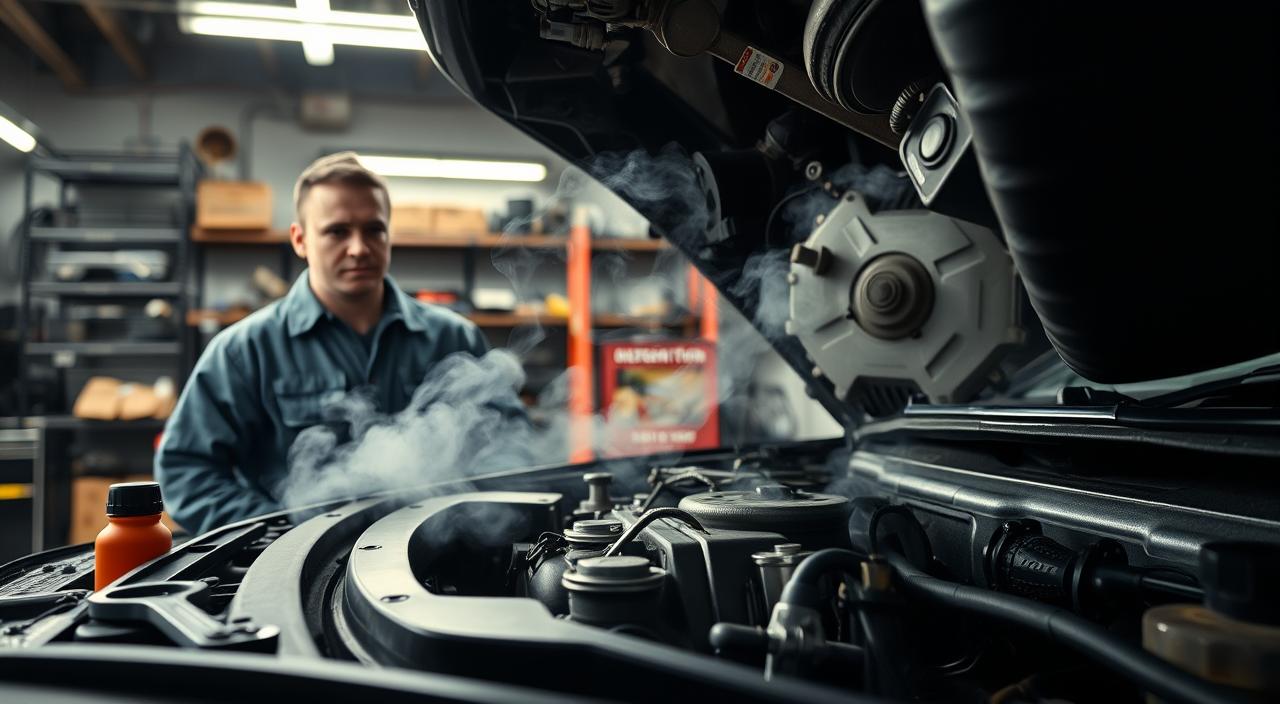
I had a problem with my car – a strong burning rubber odor from the engine. This smell means something serious might be wrong and needs fixing fast.
If your engine smells like burning rubber, you must find out why. Then, fix it to avoid more damage.
In this article, I’ll show you how to solve this problem. We’ll figure out what’s wrong and how to get rid of the smell of burning rubber coming from engine.
What Causes the Smell of Burning Rubber Coming from Engine
The smell of burning rubber from your car’s engine is a warning sign. It means there might be problems. If you ignore it, things could get worse.
Why Engine Odors Should Never Be Ignored
Engine odors, like burning rubber, can mean something is wrong. They can show that parts are wearing out. If you ignore these smells, you might face big repair bills or even safety risks.
Distinguishing Burning Rubber from Other Engine Smells
It’s important to tell burning rubber smells from others. Burning rubber has a unique smell.
Chemical Characteristics of Burning Rubber
Burning rubber smells very strong and acrid. This happens when rubber breaks down. It’s often because of too much heat or friction on rubber parts.
Common Misidentified Smells
People sometimes mix up burning rubber smells with others. Like burning plastic or oil. Knowing the differences helps you figure out what’s wrong.
| Smell Type | Cause | Common Sources |
|---|---|---|
| Burning Rubber | Overheating or friction on rubber parts | Belts, hoses, or rubber components |
| Burning Oil | Oil leak onto hot engine parts | Engine oil leak, exhaust manifold |
| Burning Plastic | Electrical issues or plastic melting | Wiring, plastic components near heat sources |
Knowing about different engine smells helps you spot problems early. This way, you can fix them before they get worse.
Immediate Steps When You Detect a Burning Rubber Odor
When you smell burning rubber from your engine, act fast. This can stop big problems. First, stay calm and think about what to do.
Pull Over Safely When Possible
If it’s safe, pull over right away when you smell burning rubber. This lets you check your car safely.
Visual Inspection Checklist
Look at your engine and parts closely. Search for wear, damage, or leaks that might cause engine burning rubber fumes. Check belts, hoses, and rubber parts for problems.
When It’s Safe to Continue Driving
If you don’t see big problems, and you’re sure it’s okay, drive carefully to a repair shop.
When to Call for Roadside Assistance
If you’re not sure about your car’s safety or see big damage, call for roadside help. This keeps you safe from more trouble.
Safety Precautions Before Troubleshooting
Before you start fixing a burning rubber smell in your car, make sure you’re safe. It’s important to protect yourself and others around you.
Ensuring the Engine Is Cool
First, let your engine cool down. A hot engine can burn you badly. So, wait until it’s cool before you start.
Tools and Equipment You’ll Need
Get all your tools ready before you start. You’ll need a flashlight, gloves, and a basic toolkit. Having everything ready makes the job safer and easier.
Personal Protective Gear
Wear protective gear to keep yourself safe. Use gloves to protect your hands, safety glasses for your eyes, and a mask to avoid bad smells.
Working in a Well-Ventilated Area
Work in a place with good air flow. This keeps you from breathing in harmful fumes. If you’re in a garage, open the door for better air.
Diagnosing Belt Problems
It’s important to find out why your car smells like burning rubber. Belt problems can cause this smell. Fixing these issues can stop more damage to your car.
Inspecting the Serpentine Belt
The serpentine belt helps power your engine. It can wear out or get damaged over time. This can make your car smell like burning rubber.
Signs of Belt Wear and Damage
Look for cracks, frays, or uneven wear on the serpentine belt. Damage can make the belt slip and smell.
Checking for Proper Tension
A belt that’s too loose or too tight can also cause problems. Make sure the belt tension is right, as your car’s manual says.
Examining the Timing Belt
The timing belt is also important. It can wear out or get damaged. Look for any signs of wear or misalignment on this belt.
Inspecting Belt Pulleys and Tensioners
Belt pulleys and tensioners help keep belts in the right place. Check these parts for wear or damage.
How to Identify a Seized Pulley
A seized pulley can make the belt slip or get misaligned. This can cause the burning smell. Look for signs of seizure or excessive wear on pulleys.
| Belt Condition | Possible Cause | Recommended Action |
|---|---|---|
| Cracked or Frayed | Wear and Tear | Replace the Belt |
| Too Loose or Too Tight | Improper Tension | Adjust Tension According to Manufacturer Specs |
| Misaligned | Pulley or Tensioner Issue | Inspect and Adjust or Replace Pulleys/Tensioners |
Identifying Fluid Leaks on Hot Engine Components
Finding fluid leaks on hot engine parts is key to fixing the burning rubber smell. When engine fluids meet hot spots, they smell like burning rubber.
Oil Leaks onto Exhaust Manifold or Headers
Oil leaks onto the exhaust can cause a burning smell. This happens when engine gaskets or seals wear out. The oil vaporizes, making a burning smell.
Transmission Fluid Leaks
Transmission fluid leaks can also smell like burning. This happens when the fluid touches hot engine parts. Look for leaks or bad seals.
Power Steering Fluid Issues
Power steering fluid leaks can smell like burning too. Check the power steering for leaks or damaged hoses.
Coolant Leaks on Hot Surfaces
Coolant leaks on hot spots can smell like burning. This might be from a leaky hose, a broken radiator, or a bad water pump.
Fixing these leaks can get rid of the burning rubber smell from your engine.
Checking for Electrical Issues Causing Burning Smells
Looking into electrical problems is key to finding out why your engine smells like burning rubber. Electrical issues can show up in many ways. They often smell like burning, which might seem like rubber.

Inspecting Wiring Harnesses and Connections
Start by checking the wiring harnesses and connections for damage or wear. Look for frayed wires, melted insulation, or loose connections that might be causing the smell. It’s important to check the wiring harnesses well. Damaged wires can cause short circuits and other problems.
Examining Fuse Boxes for Melted Components
Then, look at the fuse boxes for melted or damaged parts. A blown fuse or a melted fuse box can mean an electrical problem. Check for any signs of overheating or burning around the fuse boxes and their parts.
Alternator and Starter Motor Inspection
The alternator and starter motor are very important for your car’s electrical system. Check these parts for wear or damage. Listen for unusual noises or grinding sounds that might mean a failing alternator or starter motor.
Battery Connection Problems
Lastly, check the battery connections for corrosion or wear. Loose or corroded battery connections can cause electrical problems that smell like burning. Make sure the battery terminals are clean and well connected.
By doing these steps, you can find electrical issues that might be causing the smell. Fixing these problems quickly can stop more damage to your car’s electrical system.
Diagnosing Clutch and Brake-Related Rubber Smells
The smell of burning rubber from your car often means trouble. It usually points to problems with the clutch or brakes. It’s key to check these parts closely.
Signs of a Slipping or Overheating Clutch
A slipping or overheating clutch smells like burning rubber. You might notice:
- Slipping or hesitation when accelerating
- Unusual noises when pressing the clutch pedal
- A feeling of vibration or shuddering when engaging the clutch
Identifying Stuck Brake Calipers
Stuck brake calipers can make brakes drag, causing heat and smell. Look for:
- Uneven brake pad wear
- A burning smell when driving or after braking
- Soft or spongy brake pedal
Checking Brake Pads and Rotors
Worn or damaged brake pads and rotors can also smell like burning rubber. Check for:
- Excessive wear on brake pads or rotors
- Scoring or grooving on the rotors
Parking Brake Issues
A partially engaged parking brake can make brakes overheat, causing smell. Make sure the parking brake is off when driving.
By looking at these possible causes, you can find and fix the burning rubber smell in your car.
Examining Hoses, Gaskets and Vacuum Lines
When you smell burning rubber from your car engine, check some parts. Look at hoses, gaskets, and vacuum lines. These can wear out and touch hot parts, making the smell.
Inspecting Rubber Hoses for Contact with Hot Surfaces
Rubber hoses can get old and lose shape. If they do, they might touch hot parts. Look for wear, cracks, or wrong paths.
Checking Vacuum Line Integrity
Vacuum lines can also cause the smell. Bad or broken lines can make the engine not work right. They smell when they get hot. Check for damage or leaks.
Identifying Deteriorating Gaskets and Seals
Gaskets and seals keep your engine’s systems tight. If they get old, they can leak. Look for wear or damage.
A/C and Heater Hose Inspection
Hoses for air and heat can also smell bad if damaged. Make sure they’re okay and in the right place.
- Inspect hoses for cracks or wear.
- Check vacuum lines for damage or leaks.
- Examine gaskets and seals for deterioration.
- Verify proper routing of all hoses.
Vehicle-Specific Troubleshooting Considerations
Different cars have their own problems when you smell burning rubber. Knowing these differences helps you find the problem.
Front-Wheel Drive vs. Rear-Wheel Drive Differences
How your car moves affects where you smell burning rubber. Front-wheel drive cars have parts like the serpentine belt near the engine. This can cause different smells than rear-wheel drive cars.
Diesel vs. Gasoline Engine Considerations
Diesel engines work differently and might smell differently when they wear out. Gasoline engines can have problems like vacuum leaks or bad ignition parts.

Hybrid and Electric Vehicle Special Concerns
Hybrid and electric cars don’t usually smell like burning rubber. But, if they do, it might mean a problem with their electrical systems or batteries.
High-Performance Vehicle Common Issues
Fast cars might smell like burning rubber more often. This could be because of worn-out brakes or tires.
| Vehicle Type | Common Causes of Burning Rubber Smell |
|---|---|
| Front-Wheel Drive | Serpentine belt wear, pulley issues |
| Rear-Wheel Drive | Driveshaft or universal joint problems |
| Diesel Engine | High-pressure fuel system leaks |
| Hybrid/Electric | Electrical component malfunction |
| High-Performance | Brake overheating, high-performance tire wear |
How to Fix Common Causes of Burning Rubber Smell
The smell of burning rubber from your engine is scary. But, you can try some DIY fixes. It’s key to find and fix the problem fast to avoid more damage.
Replacing Worn or Damaged Belts
Worn or damaged belts can cause the smell. Look at your serpentine and timing belts for wear, cracks, or damage. Replacing these belts early can stop the smell and save money.
Addressing and Repairing Fluid Leaks
Leaks on hot engine parts can also make a burning smell. Look for leaks in oil, transmission fluid, power steering fluid, and coolant. Find the leak and fix it fast. Replace any bad gaskets or seals to stop leaks.
Fixing Electrical Wiring Issues
Bad electrical wiring can make smells. Check your wiring for damage or wear. Fix or replace any bad wiring to avoid more problems.
Repairing Clutch and Brake Problems
A bad clutch or stuck brake calipers can also smell like burning rubber. Check your clutch and brakes for wear or damage. Adjust or replace parts as needed to fix it.
Properly Routing Hoses Away from Hot Components
Make sure hoses are not near hot parts. Move hoses away from hot spots to stop them from melting or burning.
By doing these steps, you can find and fix the burning rubber smell in your engine. This will make your car run better and safer.
When to Seek Professional Mechanical Help
If you can’t fix the burning rubber smell from your engine yourself, get a pro mechanic. Some problems are easy to solve by yourself. But, complex issues need a mechanic’s help.
Signs the Problem Is Beyond DIY Repair
Look out for these signs: if the smell keeps coming back after fixing belts or leaks, or if you hear strange noises. Also, if you see damage to important parts like the engine or electrical systems.
What Information to Provide Your Mechanic
When you go to the mechanic, tell them everything. Say when the smell started, any recent fixes, and if your dashboard lights are on.
Expected Costs for Common Burning Rubber Repairs
| Repair | Average Cost |
|---|---|
| Serpentine Belt Replacement | $150-$300 |
| Fluid Leak Repair | $100-$500 |
| Electrical System Repair | $200-$1000 |
Choosing Between Dealership and Independent Shops
Think about cost, warranty, and the mechanic’s experience when choosing. Dealerships might know your car best but cost more. Independent shops offer good prices and personal service.
Conclusion
Fixing the burning rubber smell in your car engine is key. It keeps your car running well and keeps you safe. We talked about many reasons for this smell, like belt issues and fluid leaks.
Now you know how to find and maybe fix the smell. You can check and replace belts, fix leaks, or repair electrical problems. Quick action can stop more damage to your engine.
If you’re not sure how to fix it yourself, get help from a mechanic. Tell them all about the problem. This helps them find and fix the issue fast.
Dealing with the burning rubber smell is important. It’s not just about getting rid of a bad smell. It’s about keeping your car running well for a long time. Take action and ask for help if you need it.