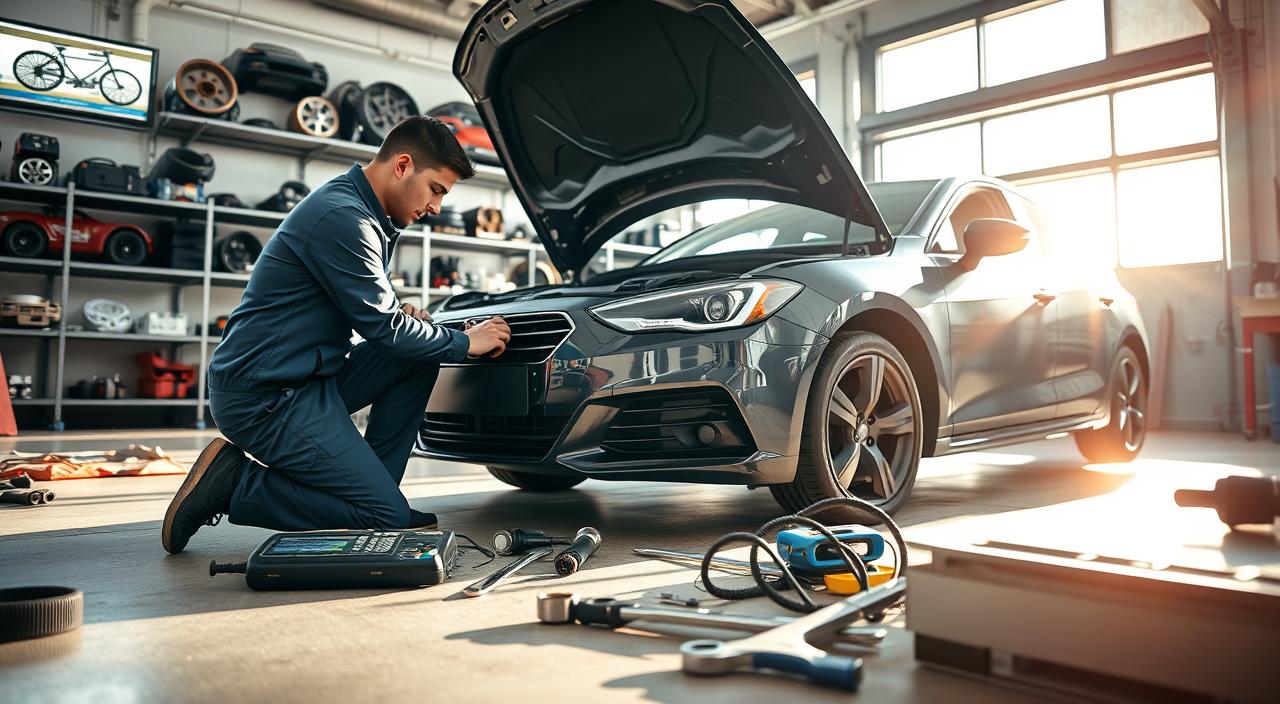
Having a rough idle in your car is annoying and worrisome. It means your engine doesn’t run smoothly when stopped. You might feel the car shaking.
Fixing engine idle problems is key to keeping your car in good shape. A rough idle can hide bigger issues that need fixing.
This article will help you find out why your car idles roughly. It will also show you how to fix it. Learning about car troubleshooting is the first step to solving engine problems. This way, your car will run better.
What is a Rough Idle?
Finding out if your engine idles rough is key to fixing it. A rough idle means the engine’s RPMs go up and down a lot. This happens when your car is stopped.
Defining Normal vs. Abnormal Engine Idle
A normal engine idle is smooth and steady. It usually stays between 600 to 1000 RPM. But, a rough idle has problems like surging, stalling, or shaking.
Common Symptoms of Rough Idle
Some signs include:
- Fluctuating RPMs
- Engine stalling
- Vibrations
- Unusual noises
Why Addressing Rough Idle Problems is Important
Fixing rough idle issues is very important. They can make your car use more fuel and pollute more. If you ignore these problems, they can damage your engine and cost a lot to fix.
| Symptom | Possible Cause | Impact if Untreated |
|---|---|---|
| Fluctuating RPMs | Faulty Idle Air Control Valve | Poor fuel efficiency |
| Engine Stalling | Clogged Fuel Filter | Engine damage |
| Vibrations | Bad Spark Plugs | Increased emissions |
Rough Idle Causes and Solutions: An Overview
A rough idle can mean many things are wrong with your car. Finding out what’s wrong is key to keeping your car in good shape. If your car idles roughly, it might not run well, use more fuel, and could get worse if not fixed.
Quick Diagnostic Checklist
To find out why your car idles roughly, start with a quick check. Look at the dashboard lights, watch the idle speed, and check for leaks or worn parts. This method helps find the problem faster.
- Check for any dashboard warning lights
- Monitor the idle speed
- Inspect for signs of leaks or worn-out components
Most Common Culprits Behind Rough Idle
Common reasons for a rough idle include problems with fuel, ignition, air intake, and vacuum leaks. Knowing these can help you figure out and fix the issue.
Simple vs. Complex Issues
Problems with a rough idle can be easy or hard. Simple ones might be loose or dirty parts. But complex ones could be bad sensors or engine problems.
Easy DIY Fixes
Some issues are easy to fix yourself. You can clean or replace the air filter, check and swap out spark plugs, or tighten loose parts.
Problems Requiring Special Tools
But some problems need special tools, like an OBD-II scanner. These tools help find and fix problems with the car’s computer or sensors.
Knowing what causes a rough idle and having the right tools helps car owners fix their cars. This way, your car will run better and use less fuel.
Essential Tools for Diagnosing Rough Idle
To fix rough idle problems, you need basic and advanced tools. Basic tools are the first step in any car repair.
Basic Hand Tools You’ll Need
A good toolbox has many screwdrivers, pliers, and wrenches. These help with initial checks and small fixes.
Diagnostic Tools Worth Investing In
For deeper checks, you need special tools. An OBD-II scanner is key for finding error codes. Also, a multimeter for electrical checks and a fuel pressure tester for fuel system checks are important.
Using an OBD-II Scanner Effectively
An OBD-II scanner gives vital info about your car. Knowing how to read error codes is crucial.
Understanding Error Codes Related to Idle Issues
Error codes for idle problems often show issues with the idle air control, fuel injection, or ignition. A table with common error codes and their meanings is helpful:
| Error Code | Description |
|---|---|
| P0506 | Idle Control System RPM Lower Than Expected |
| P0507 | Idle Control System RPM Higher Than Expected |
| P0300 | Random/Multiple Cylinder Misfire Detected |
Knowing these codes helps you find the cause of rough idle. This makes your diagnostic work more focused.
Fuel System Problems That Cause Rough Idle
Rough idling often comes from fuel system problems. The fuel system gives the engine the fuel it needs. When it fails, the engine can idle roughly.
Dirty or Clogged Fuel Injectors
Fuel injectors spray fuel into the engine. If they get dirty or clogged, the engine gets too little fuel. This makes the engine idle roughly.
Symptoms and Diagnosis
Signs include poor engine performance and a rough idle. To find the problem, use a fuel injector cleaning kit or an OBD-II scanner. Look for trouble codes related to the fuel injectors.
Cleaning Methods and Replacement Options
You can clean fuel injectors with special kits. If cleaning doesn’t work, you might need to replace them.
Fuel Pressure Regulator Issues
A bad fuel pressure regulator can cause uneven fuel pressure. This leads to a rough idle. You might notice the engine’s performance changes and starting problems.
Fuel Filter Maintenance
A clogged fuel filter limits fuel to the engine, causing a rough idle. Keep the fuel filter clean by replacing it as the car maker suggests.
Bad Fuel Pump Signs
A failing fuel pump means the engine gets too little fuel. This results in a rough idle. Look for signs like poor engine performance and a whining noise from the fuel tank.
| Fuel System Component | Symptoms of Failure | Maintenance/Repair |
|---|---|---|
| Fuel Injectors | Rough idling, decreased performance | Cleaning or replacement |
| Fuel Pressure Regulator | Inconsistent engine performance | Replacement |
| Fuel Filter | Rough idling, engine stalls | Regular replacement |
| Fuel Pump | Engine stalls, whining noise | Replacement |
Ignition System Troubleshooting and Repairs
Ignition system problems can make your car idle badly. Knowing how to fix these issues is key for car owners. The ignition system makes the spark that starts the fuel.
Spark Plug Inspection and Replacement
Spark plugs are very important. They can get old or dirty, causing a bad idle. It’s easy to check and replace them.
Reading Spark Plug Conditions
Looking at spark plugs can tell you a lot about your engine. Check for wear, dirt, or oil.
Choosing the Right Replacement Plugs
Picking the right spark plugs is important. Think about the type, heat range, and what the maker says.
Ignition Coil Testing and Replacement
The ignition coil is also key. A bad coil can make your car idle badly. Test the coil to see if it’s working right.
Distributor and Ignition Wire Issues
Problems with the distributor cap, rotor, or wires can also cause a bad idle. Look for wear or damage on these parts.
Timing Problems Affecting Idle
Timing issues can also make your car idle badly. If the timing is off, it can stall. Fixing the timing can help.
Some important steps for fixing ignition system problems include:
- Check and replace spark plugs if needed
- Test and replace the ignition coil if it’s bad
- Look for damage on the distributor cap, rotor, and wires
- Adjust the ignition timing as the maker suggests
By following these steps, you can find and fix ignition system problems. This will help your car run better.
Air Intake and Sensor Malfunctions
When your car idles roughly, check the air intake and sensors. Problems here can hurt your engine’s performance. This can make your car idle roughly.
Mass Airflow Sensor Problems
The Mass Airflow (MAF) sensor checks how much air goes into the engine. A bad MAF sensor can make the engine idle poorly. Symptoms include hesitation, stalling, or less fuel efficiency.
Cleaning vs. Replacing
Try cleaning the MAF sensor first with a special cleaner. If it still doesn’t work, you might need to replace it.
Throttle Position Sensor Issues
The Throttle Position Sensor (TPS) watches the throttle’s position. It helps adjust the engine’s performance. A bad TPS can make the engine idle unevenly.
Oxygen Sensor Failures
Oxygen sensors check the oxygen in exhaust gases. A bad oxygen sensor can mess up the air-fuel mix. This can cause the engine to idle roughly.
Idle Air Control Valve Maintenance
The Idle Air Control (IAC) valve helps keep the engine’s idle speed steady. A dirty or broken IAC valve can make the engine idle poorly.
Symptoms of a Bad IAC Valve
Signs include rough idling, stalling, or trouble keeping the idle steady.
Cleaning and Replacement Procedures
Cleaning the IAC valve with the right cleaner might fix it. If cleaning doesn’t work, you might need to replace it.
| Sensor | Function | Symptoms of Failure |
|---|---|---|
| Mass Airflow Sensor | Measures air entering the engine | Hesitation, stalling, poor fuel efficiency |
| Throttle Position Sensor | Monitors throttle position | Irregular idling, hesitation |
| Oxygen Sensor | Measures oxygen in exhaust gases | Rough idling, poor fuel efficiency |
| Idle Air Control Valve | Regulates idle speed | Rough idling, stalling |

Detecting and Fixing Vacuum Leaks
Finding and fixing vacuum leaks is key for a good engine. Vacuum leaks can cause problems like rough idling and bad fuel use. They also make the engine perform poorly.
Common Locations for Vacuum Leaks
Vacuum leaks often happen where hoses and connections get damaged. Places like:
- Intake manifold gasket
- Vacuum hoses
- Throttle body gasket
- PCV valve and hoses
DIY Methods to Find Vacuum Leaks
There are easy ways to find vacuum leaks yourself. Two good methods are:
Smoke Test Method
The smoke test uses smoke to show where leaks are. It’s great for finding leaks fast.
Carburetor Cleaner Method
Carburetor cleaner can help too. Spray it on possible leak spots and listen. If the engine speed changes, you found a leak.
Repairing Different Types of Vacuum Leaks
Fixing a vacuum leak depends on where and how bad it is. You might need to replace hoses, gaskets, or parts.
Intake Manifold Gasket Issues
The intake manifold gasket often causes leaks. Look out for coolant leaks, rough idling, and poor performance. To fix it, take off the intake manifold and put on a new gasket.
| Symptom | Possible Cause | Repair |
|---|---|---|
| Rough Idling | Vacuum Leak | Inspect and replace damaged hoses or gaskets |
| Decreased Fuel Efficiency | Faulty Intake Manifold Gasket | Replace intake manifold gasket |
«A vacuum leak can cause your engine to run lean, potentially leading to serious engine damage if not addressed promptly.»
– Automotive Expert
Knowing where vacuum leaks happen and how to find them helps fix your car’s problems. This keeps your engine running well.
Engine Mechanical Issues Affecting Idle
Engine problems can really mess with your car’s idle. If the engine isn’t working right, it might idle rough. This can also make your car use more fuel and might hurt it more later.
Valve and Timing Problems
Valve and timing issues often cause a car to idle badly. Things like worn valve seals or a bad timing belt can mess things up. Keeping up with maintenance, like replacing the timing belt, can help avoid these problems.
Low Compression Concerns
Low compression in cylinders can make your car idle rough. This might happen if piston rings wear out or if cylinder walls get damaged. A compression test can find these problems. Fixing them quickly is key to avoiding more damage.
EGR Valve Malfunctions
The EGR valve helps keep emissions down by sending exhaust gases back into the engine. But if it breaks, it can make your car idle badly. This is just one of the problems it can cause.
Cleaning the EGR System
Keeping the EGR system clean is important. A special cleaner can get rid of carbon buildup and make the valve work better.
When to Replace EGR Components
If cleaning doesn’t fix the problem, you might need to replace the EGR valve. Look for signs like a car that won’t run well or keeps showing EGR-related error codes.
PCV Valve Issues and Solutions
The PCV valve helps keep engine pressure right. If it gets clogged or breaks, it can cause your car to idle badly. Replacing the PCV valve is easy and cheap. It can fix these problems.

Computer and Electrical Problems
Modern cars have complex systems. This means computer and electrical problems can cause rough idling. The Engine Control Unit (ECU) is key in managing engine performance. Issues with the ECU can lead to irregular idling.
ECU-Related Idle Issues
The ECU uses data from sensors to control the engine. If the ECU is faulty, it can misread this data. This leads to rough idling. ECU-related issues are hard to find and might need special tools.
Wiring and Connection Problems
Wiring and connection problems can mess up signals. This causes irregular idling. Common issues include corrosion, wear, and damage to wiring and connectors.
Battery and Alternator Effects on Idle
A weak battery or a bad alternator can cause voltage problems. These problems affect the ECU’s work, leading to rough idling. It’s important to keep the battery and alternator in good shape.
Resetting the ECU When Necessary
Resetting the ECU can fix some rough idling problems. You can do this by disconnecting the battery for a few minutes. Or, use a scan tool to reset the ECU. But, do this carefully and follow the maker’s instructions.
When to Seek Professional Assistance
Not all rough idle problems can be fixed by yourself. Knowing when to get professional assistance is key. Some car issues need a pro mechanic’s skills.
Signs That DIY Isn’t Enough
If you’ve tried to fix it but it still doesn’t work, you need professional help. Also, if you’re not sure what’s wrong or don’t have the right tools, get a pro.
What to Expect at the Mechanic
At the mechanic, they’ll check your car with special tools. They’ll tell you what’s wrong and what to do next.
Cost Considerations for Professional Repairs
How much it costs to fix your car can change a lot. It depends on the problem and the fix. Always ask for a clear price before they start.
Finding a Trustworthy Mechanic
To find a good mechanic, ask people you trust or check online. Make sure they’re certified and know your car.
Knowing when to get professional assistance helps fix your car’s rough idle right.
Conclusion
Fixing a car’s rough idle needs you to know the causes and how to fix it. Look for problems in the fuel, ignition, air intake, or engine. Then, use the right fixes.
Keeping your car in good shape makes it run better and saves fuel. It also stops bigger problems from happening. Regular checks and quick fixes are key. For tough issues, get help from a pro.
To solve rough idle problems, do some checks yourself, try simple fixes, and know when to ask for help. Follow the steps in this guide. This will make your car run smoothly again, making it last longer.