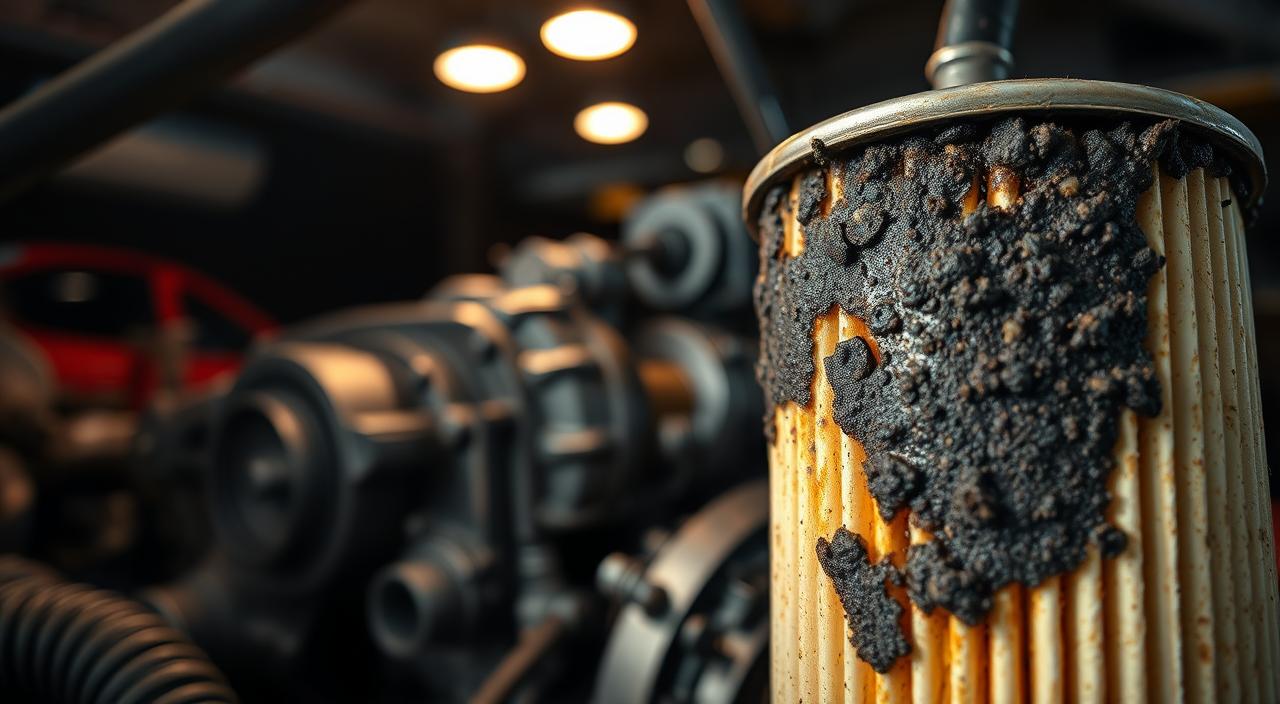
A clogged engine oil filter can cause big engine problems if not fixed fast. The engine oil filter keeps the engine running well by cleaning the oil. It stops bad stuff from getting in.
If the filter gets clogged, it can’t clean the oil anymore. This might make the engine run poorly, use more fuel, and even break down.
Knowing the signs of a clogged engine oil filter is key to keeping your car in good shape. Spotting these signs early lets you change the filter before things get worse.
Understanding the Role of Engine Oil Filters
The engine oil filter is very important for a car’s engine. It keeps the engine oil clean by removing bad stuff. This helps the engine run well.
What Does an Oil Filter Do?
An oil filter acts as a barrier. It catches harmful particles and keeps them out of the engine. This stops damage and keeps moving parts from wearing out. As Tom Harris, a renowned automotive expert, says, «A good oil filter is key to a long engine life.»

How Oil Filters Affect Engine Performance
A dirty oil filter hurts engine performance. It makes the car use more fuel and lose power. Changing the oil filter often is very important.
‘Motorists should check their oil filter regularly to avoid potential engine damage.’
This shows how important it is to keep up with maintenance.
Why Oil Filters Get Clogged
It’s important to know why oil filters get clogged. This helps keep your car’s engine running well. Oil filters catch bad stuff, but they can fill up and block.
Common Causes of Oil Filter Clogging
Many things make oil filters clog. These include:
- Not changing oil often, causing buildup.
- Using bad oil with more dirt.
- Driving in very hot or dusty places.
- Wear and tear on the engine, adding more dirt to oil.
| Cause | Effect on Oil Filter |
|---|---|
| Infrequent Oil Changes | Buildup of contaminants, leading to clogging. |
| Low-Quality Oil | Increased impurities, accelerating filter saturation. |
| Harsh Driving Conditions | More debris and contaminants entering the filter. |
The Natural Lifecycle of an Oil Filter
Oil filters don’t last forever. They get less good over time. They can’t filter as well when they’re full of dirt. Changing oil and filters often keeps your engine healthy.

Signs of a Clogged Engine Oil Filter
Knowing the signs of a clogged engine oil filter can save you money. A clogged oil filter can cause many problems. These problems can hurt your engine’s performance and life.

Primary Warning Indicators
The first signs of a clogged engine oil filter include dashboard warning lights and unusual engine noises. If your oil pressure light turns on, it means your engine’s lubrication system has a problem.
Another sign is a noticeable decrease in engine performance. This might mean your car goes slower or feels tired when you drive.
Secondary Symptoms to Monitor
There are also secondary symptoms of a clogged oil filter. These include changes in exhaust emissions. If your exhaust looks darker or dirtier, it means your engine is not clean.
Engine overheating is another sign. A clogged oil filter can stop your engine from cooling down. This can cause it to overheat.
Watching for these signs and fixing them quickly can stop big engine problems. This keeps your car running well and smoothly.
Decreased Engine Performance
A bad oil filter can make your engine perform poorly. When the filter gets clogged, it blocks oil flow to the engine. This leads to many performance problems.
Power Loss and Sluggish Acceleration
A clogged oil filter makes your engine lose power. It also makes it hard to accelerate. This is because the engine doesn’t get enough lubrication.
You might notice your car doesn’t go as fast as it used to. It also doesn’t have as much power.
Reduced Fuel Efficiency
A clogged oil filter also means your car uses more fuel. When the engine works harder because it’s not lubricated right, it uses more gas. This costs more money and pollutes the environment.

Impact on Daily Driving
A clogged oil filter can really affect how you drive every day. You might notice your engine idling roughly. It might hesitate when you try to speed up, or even stall.
These problems can be annoying and even dangerous. They can happen when you’re driving in busy traffic or trying to merge onto a highway.
Regular maintenance, like changing the oil and filter on time, is key. It keeps your car running well and lasts longer. By keeping up with oil changes and filter swaps, you can avoid these problems. This makes driving smoother and safer.
Unusual Engine Noises
Unusual engine noises can mean your oil filter is clogged. This could harm your engine if not fixed. These sounds can be different, showing there’s a problem.
Knocking and Ticking Sounds
Knocking and ticking sounds are common with a clogged oil filter. Knocking sounds mean your engine might not be getting enough oil. Ticking sounds could mean your engine’s valves or parts are not working right.
What These Noises Indicate
These sounds usually mean your engine isn’t getting enough oil. A clogged oil filter stops oil from flowing well. This causes parts to rub together, making strange noises.
Distinguishing Filter-Related Noises from Other Issues
It’s important to know if noises are from a clogged oil filter or something else. You need to check carefully. Here are some things to look at:
- The timing and consistency of the noises
- The presence of other symptoms like decreased performance or oil leaks
- The overall condition of the engine and its maintenance history
By paying attention to these details, you can figure out and fix the problem. This might stop more serious damage to your engine.
Oil Pressure Warning Light
When your dashboard lights up with an oil pressure warning, it’s signaling a potential engine issue. This warning light is a crucial indicator that should not be ignored, as it relates directly to the health and longevity of your engine.
Understanding Your Dashboard Warnings
The oil pressure warning light is part of your vehicle’s onboard diagnostics system. It alerts you to issues that could lead to engine damage. Low oil pressure can cause significant harm, including increased wear on moving parts and potentially catastrophic engine failure.
When to Take Immediate Action
If the oil pressure warning light illuminates, pull over safely as soon as possible and turn off the engine. Continuing to drive with low oil pressure can lead to severe damage. Check your oil level and look for signs of leaks.
Relationship Between Oil Pressure and Filter Condition
A clogged oil filter can lead to decreased oil pressure. It restricts the flow of oil to the engine. Regular maintenance, including oil changes and filter replacements, is key to preventing such issues. As noted by automotive experts, «A well-maintained oil filter is crucial for optimal engine performance and longevity.»
Dirty Exhaust Emissions
A clogged oil filter can make your exhaust dirty. It stops the oil filter from cleaning the oil well. This leads to dirty exhaust.
Changes in Exhaust Color and Smell
A clogged oil filter can make your exhaust look and smell different. If it’s black or dark gray, it might mean your engine is burning oil. A strong, burnt smell means oil is leaking into the engine.
| Exhaust Color | Possible Cause |
|---|---|
| Black or Dark Gray | Burning oil due to clogged filter |
| White or Blue | Coolant or oil leakage |
Environmental Impact of Clogged Filters
A clogged oil filter hurts your car and the environment. Dirty exhaust makes the air worse. Experts say, «Cutting down on vehicle emissions is key to cleaner air and less climate change.»
«The quality of our air is directly linked to the emissions from vehicles. Ensuring that vehicles are properly maintained is a critical step in reducing pollution.»
Keeping your car in good shape is important. Regular oil filter changes help the planet.
Engine Overheating Issues
Engine oil filters help keep the engine cool. When they get clogged, the engine can get too hot. A clean oil filter makes sure the engine’s parts move smoothly, which keeps it cool.
How Oil Filtration Affects Temperature
A clogged oil filter makes it hard for oil to get to the engine. This means the engine’s parts rub together more, making it hot. It’s important to keep the oil filter clean to avoid this.
Preventing Heat-Related Damage
It’s key to watch the engine’s temperature and change the oil filter when needed. Using the right oil filter for your car helps it run well.
Temperature Monitoring Tips
Watch the temperature gauge on your dashboard for any sudden changes. Check the oil filter for blockages often. Using tools to check the engine’s health is a good idea too.
| Symptoms | Causes | Actions |
|---|---|---|
| Engine Overheating | Clogged Oil Filter | Replace Oil Filter |
| Increased Engine Noise | Reduced Lubrication | Check Oil Level and Quality |
| Decreased Engine Performance | Increased Friction | Regular Maintenance |
How to Diagnose a Clogged Oil Filter
Checking your oil filter is key to keeping your car’s engine running well. A clogged filter can make your car use more fuel and even damage the engine.
DIY Inspection Methods
You can check your oil filter yourself before calling a mechanic. Here are two ways to do it:
- Visual Inspection Techniques: Look for damage or leaks on the oil filter. Check for dents, rust, or oil spills.
- Pressure Testing at Home: Use a pressure gauge to see if oil pressure is low. Low pressure might mean the filter is clogged.
Visual Inspection Techniques
Looking at the oil filter can show you if it’s damaged. Check for wear or damage. Make sure it’s tight and in place.
Pressure Testing at Home
Pressure testing uses a gauge to check oil pressure. If it’s too low, it could mean the filter is clogged. Always check your car’s manual for how to do it safely.
When to Consult a Professional
If you’re not sure or if DIY checks show a problem, get a mechanic’s help. They have the right tools and know-how to fix it.
Diagnostic Tools and Equipment
Mechnics use special tools to find engine problems. They might have advanced gauges, analyzers, and software.
By following these steps, you can find out if your oil filter is clogged. Then, you can fix it to avoid engine damage.
Replacing Your Engine Oil Filter
Changing your engine oil filter is easy but very important. A dirty filter can make your engine run poorly. It might even overheat. So, it’s key to know how to change it.
Step-by-Step Replacement Guide
To replace your engine oil filter, follow these steps. First, get the right tools and a new filter that fits your car.
Tools You’ll Need
- A socket wrench or filter wrench
- A new oil filter that fits your car
- Rags for cleaning
- Gloves and safety glasses
Safety Precautions
Make sure your car is parked on a flat surface. The engine should be cool. Wear gloves and safety glasses to avoid cuts or spills.
Choosing the Right Filter for Your Vehicle
Picking the right oil filter is very important. Check your car’s manual or the manufacturer’s website. The wrong filter can cause engine problems due to clogged oil filter.
| Vehicle Type | Recommended Oil Filter |
|---|---|
| Passenger Vehicles | Standard Oil Filter (e.g., WIX XL510) |
| High-Performance Vehicles | High-Flow Oil Filter (e.g., WIX XP1000) |
Proper Disposal of Used Filters
Used oil filters are harmful and must be thrown away right. Take it to a recycling center or an auto parts store that recycles filters.
«Proper disposal of used oil filters is not only environmentally responsible but also required by law in many jurisdictions.»
By following these steps, you’ll keep your engine oil filter changed right. This keeps your car running well and avoids engine troubles.
Preventative Maintenance Schedule
A good maintenance plan stops oil filter blockage indicators before they start. Regular checks keep your car’s engine running well for longer.
Recommended Oil Change Intervals by Vehicle Type
Every car needs oil changes at different times. Synthetic oil lasts longer than regular oil. Always check your car’s manual for the best oil change schedule. Regular oil should be changed every 5,000 to 7,500 miles. Synthetic oil can go up to 10,000 to 15,000 miles.
Factors That Affect Filter Lifespan
Many things can change how often you need to change your oil filter. Driving conditions, weather, and oil type matter a lot. For example, very cold weather and lots of stops can make the filter wear out faster.
Record-Keeping for Maintenance
Keeping a maintenance log is very helpful. It helps you remember when you changed the oil or replaced the filter. It’s good for keeping up with your car’s care.
Seasonal Considerations for Oil Filter Health
Seasons can affect your oil filter. Cold weather makes oil thicker, which is harder for the filter. Checking the filter before very cold weather can prevent problems.
Conclusion
It’s very important to know when your engine oil filter is clogged. This article has shown you how to spot problems. Signs include bad engine performance, strange noises, and a warning light.
Knowing these signs helps you avoid big engine problems and expensive fixes. Keeping up with oil changes and filter swaps is key. It helps your engine run well.
Watching your car’s health and fixing oil filter issues can make your engine last longer. This improves your car’s performance and makes driving safer and greener.
FAQ
What are the signs of a clogged engine oil filter?
Signs include poor engine performance and odd noises. You might also see the oil pressure light on. Dirty exhaust and overheating are other signs.
How do I know if my oil filter is clogged?
Watch your car’s performance and listen for strange sounds. Dashboard lights can also warn you. Regular checks can spot problems early.
Can a clogged oil filter cause engine damage?
Yes, it can. A clogged filter hurts engine performance and causes overheating. This can lead to expensive repairs if not fixed fast.
What are the symptoms of a clogged oil filter?
Look out for power loss and slow acceleration. Fuel efficiency might drop too. You might hear knocking or ticking sounds. Also, exhaust color or smell might change.
How often should I replace my engine oil filter?
It depends on your car and how you drive. Usually, change the oil filter with every oil change.
Can I diagnose a clogged oil filter myself?
Yes, you can do DIY checks like looking and testing pressure. But, if you’re not sure, a mechanic can help.
What happens if I don’t replace a clogged oil filter?
Not replacing it can hurt your engine’s performance. It also raises the risk of damage. This could cost a lot to fix or even fail your engine.
Are there any preventative measures to avoid clogged oil filters?
Yes, regular maintenance helps. This includes timely oil changes and filter swaps. It keeps your engine running well.