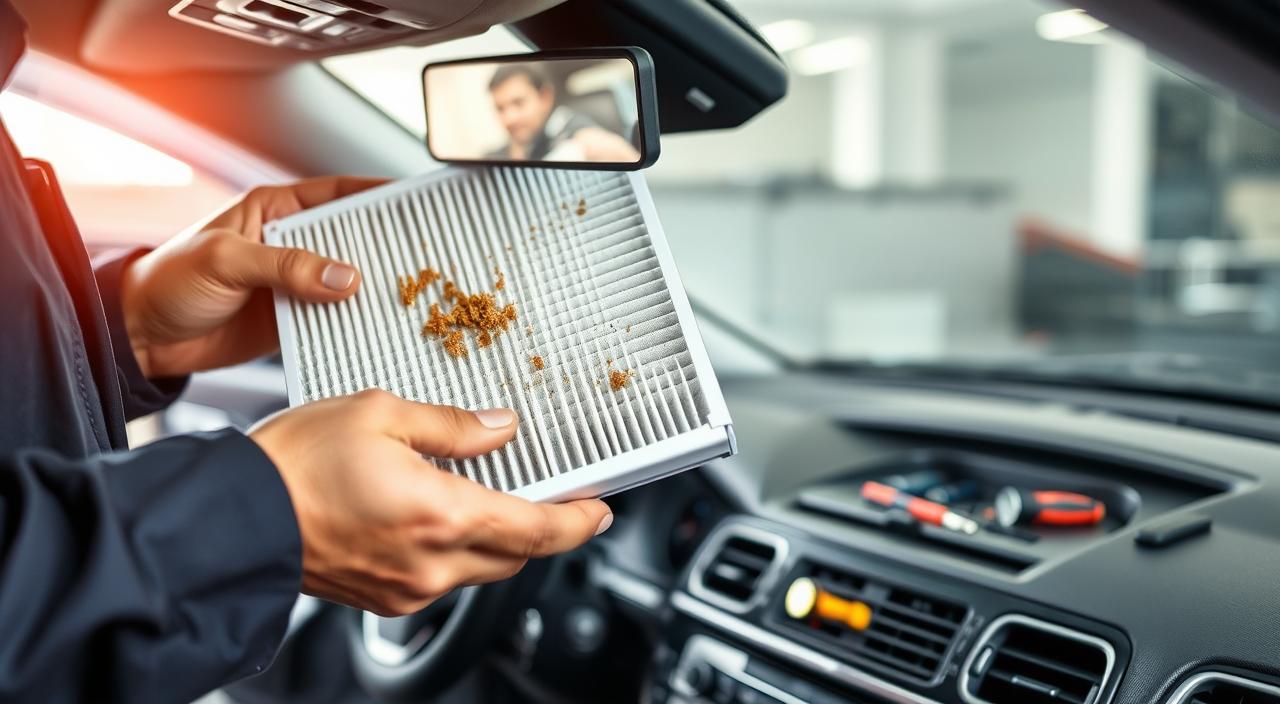
Keeping your car’s air clean is key for a comfy ride. The cabin air filter is a big part of this. It helps make the air you breathe while driving clean.
I’ll show you how to find and change your cabin air filter. You’ll get easy steps and tips to help you. Knowing about cabin air filters and how to care for them is important. It keeps the air in your car fresh.
Changing your cabin air filter is easy and makes your car’s air better. This guide will help you find and swap out your cabin air filter easily. You’ll drive healthier and feel more comfortable.
What Is a Cabin Air Filter and Why It Matters
A cabin air filter keeps your car’s air clean and healthy. It filters the air that comes into your car through the heating, ventilation, and air conditioning (HVAC) system.

Function and Purpose of Cabin Air Filters
The main job of a cabin air filter is to clean the air. It removes dust, pollen, and other bad stuff from the air. This makes the air in your car better.
Most cabin air filters catch tiny particles, like allergens and some viruses. They have layers that trap these small things.
A cabin air filter does more than just clean the air. It also gets rid of bad smells and fumes. This is great for people who drive a lot or have allergies.
Health and Comfort Benefits
Using a cabin air filter is good for your health. It keeps out allergens and pollutants. This can help prevent allergies and breathing problems.
«A clean cabin air filter is essential for maintaining good air quality inside your vehicle, which is crucial for the health and comfort of both drivers and passengers.»
It also makes driving more comfortable. By getting rid of bad smells, it makes your car feel nicer. You should change the cabin air filter often to keep these benefits.
| Benefits | Description |
|---|---|
| Improved Air Quality | Filters out dust, pollen, and other pollutants |
| Reduced Allergy Symptoms | Captures allergens, reducing the risk of allergic reactions |
| Enhanced Comfort | Reduces odors and fumes, creating a more pleasant driving environment |
Signs Your Cabin Air Filter Needs Replacement
Knowing when to replace your cabin air filter can make your car’s air better. A clean cabin air filter is key to fresh air inside your car. Over time, it gets full of dust, pollen, and more, making it less effective.
Reduced Airflow from Vents
Weak air from your vents means your filter might need a change. Try turning on your car’s heat or AC and see if the air feels weaker. If it does, it’s time to DIY cabin air filter replacement.
Unusual Odors in the Cabin
Strange smells in your car can also mean it’s time for a new filter. A musty smell when you turn on the heat or AC means your filter is wet and might have mold. Replacing it can get rid of these smells and make the air better.

Increased Allergy Symptoms
More allergy symptoms while driving could mean your filter is not working right. A dirty filter can spread allergens and irritants, making symptoms worse.
Visual Inspection Indicators
Looking at your cabin air filter can show if it’s dirty. Check for dirt, dust, or debris. If it’s dirty, it’s time for a new one. Your car’s manual can help you with DIY cabin air filter replacement.
| Signs | Description | Action |
|---|---|---|
| Reduced Airflow | Weak air coming from vents | Replace cabin air filter |
| Unusual Odors | Musty or moldy smells | Replace cabin air filter |
| Increased Allergy Symptoms | Sneezing, congestion | Replace cabin air filter |
| Visual Inspection | Visible dirt, dust, or debris | Replace cabin air filter |
Tools and Materials Needed for Replacement
Before you start, make sure you have the right tools and materials. This will help you replace your cabin air filter easily and quickly.
Basic Tools Required
Most cars need just a few tools to change the cabin air filter. You’ll likely need a screwdriver, either Phillips or flathead, to open the filter box. Some cars might need a special tool to remove clips or fasteners. Always check your car’s manual for the exact tools you need.
Choosing the Right Replacement Filter
Picking the right filter is key for clean air and a good fit. Here are some important things to think about:
- Standard vs. HEPA Filters: Standard filters catch big particles. HEPA filters catch smaller particles and allergens too.
- Size and Fit Considerations: Make sure the new filter fits your car perfectly. Check the size and type, like activated carbon or anti-allergen, to match.
Standard vs. HEPA Filters
HEPA filters clean the air even better. They’re great for people with allergies or breathing problems.
Size and Fit Considerations
Always check your car’s manual or the manufacturer’s website for the right filter size and type. This ensures a proper fit and good performance.

Cabin Air Filter Location and Replacement Guide
Finding the cabin air filter is key to keeping your car’s air clean. It helps remove pollutants from the air inside your car. First, you need to know where it is.
General Location Guidelines
The cabin air filter is usually behind the glove box or under the dashboard. But, its spot can change based on your car’s type. It’s in a box and might say «cabin air filter» or «HVAC filter» on it.
In some cars, it’s in the engine area or behind a panel in the back seat. The best way to know for sure is to check your car’s manual.

Accessing Your Vehicle’s Manual
Your car’s manual is full of useful info, including where the cabin air filter is. It often has a picture or text to help you find it.
If you lost your manual, many makers have digital ones on their websites. Just search for your car’s make and model.
Using Online Resources and Mobile Apps
There are also online guides and apps to help find the cabin air filter. Sites like RepairPal or Autozone’s Repair Help have guides for your car. They show pictures and steps.
Apps from car makers or repair guides can also help. They give instructions and videos to make replacing the filter easy.
With these tools, you can easily find and replace your cabin air filter. This keeps the air in your car clean and healthy.
Common Cabin Air Filter Locations by Vehicle Type
The cabin air filter’s spot changes a lot between different cars. It’s key to know where it is. This is because the filter’s job is the same everywhere, but its spot can be different.
Sedans and Compact Cars
In sedans and small cars, the filter is easy to find. It’s often behind the glove box or under the dashboard. This makes it simple to change it yourself.
Japanese Models (Toyota, Honda, Nissan)
For cars made in Japan, like Toyota, Honda, and Nissan, the filter is usually behind the glove box. For example, in many Toyotas, you can get to it by taking out the glove box or through a special panel.
American Models (Ford, Chevrolet)
For American cars, like Ford and Chevrolet, the filter’s spot is similar. In some Fords, it’s in the glove box. In Chevys, it might be under the dashboard or behind the glove box.
| Vehicle Type | Typical Cabin Air Filter Location |
|---|---|
| Japanese Sedans (Toyota, Honda) | Behind the glove compartment |
| American Sedans (Ford, Chevrolet) | Under the dashboard or behind the glove box |
SUVs and Crossovers
SUVs and crossovers have different designs, so the filter’s spot can vary. But, it’s often in the same places as sedans, like behind the glove box or under the dashboard.
Trucks and Large Vehicles
Big trucks and vehicles have complex systems. Their cabin air filters might be harder to find. They could be under the hood or in the dashboard.
Luxury and European Models
Luxury and European cars have unique designs. Their cabin air filters might be in special spots. Always check your car’s manual or the maker’s guide for where it is.
Knowing where your cabin air filter is helps with easy upkeep. By finding it based on your car type, you keep your air clean and fresh.
Step-by-Step Replacement Process
Replacing your cabin air filter is easy and can make your car’s air better. You just need a few simple steps and basic tools.
Safety Precautions Before Starting
First, turn off the engine and use the parking brake. Also, check your car’s manual for safety tips on replacing the filter.
Preparing Your Vehicle
To get to the filter, you might need to move parts in your car. Look in your manual for how to do this for your car. Usually, you open the glove box or take off a panel.
Accessing the Filter Housing
The filter housing is behind the glove box or under the dashboard. You’ll need to remove clips or screws to get to it. Be careful not to hurt anything around it.
Removing the Old Filter
After you get to the housing, pull out the old filter. Notice how it’s set and any dirt. This helps when putting in the new one.
Installing the New Filter
To put in the new filter, line it up with the arrows on the filter and housing. Make sure it fits right and the housing is closed tight. Check that all clips or screws are back in place to stop air leaks.
By doing these steps, you can replace your cabin air filter. This keeps your car’s air clean and comfy.
Specific Replacement Instructions for Popular Vehicles
Replacing the cabin air filter is similar for many cars. But, some popular models need special steps. I’ll share detailed guides for Toyota, Honda, Ford, and Chevrolet cars.
Toyota and Honda Models
Replacing the cabin air filter in Toyota and Honda cars is easy. Here are tips for well-known models:
Camry, Accord, and Civic
In Camry, Accord, and Civic, the filter is behind the glove box. You’ll need to take out the glove box or a lower panel to get to it.
RAV4 and CR-V
The RAV4 and CR-V have their filter under the dashboard or behind the glove box. Look in your owner’s manual for where it is.
Ford and Chevrolet Models
Ford and Chevrolet cars also need special steps for replacing the cabin air filter. Here are some tips for well-known models:
F-150, Silverado, and Pickup Trucks
In F-150, Silverado, and pickup trucks, the filter is under the dashboard or behind the glove box. You might need to remove some trim to get to it.
Escape, Equinox, and Crossovers
The Escape, Equinox, and other crossovers have different filter locations. Check your manual or ask a mechanic if you’re not sure.
Challenging Filter Locations
Some cars have filters that are hard to get to. Here are a couple of examples:
Under-Dashboard Locations
In some cars, the filter is under the dashboard. This means you’ll have to remove trim or other parts to get to it.
Behind-Glove-Box Locations
Many cars have the filter behind the glove box. This might mean taking out the glove box or trim to find it.
By following these specific steps for popular cars, you can replace your cabin air filter. This will make your car’s air cleaner and healthier.
Troubleshooting Common Replacement Issues
Replacing the cabin air filter is easy for many people. But, some issues can make it hard. Knowing how to fix these problems can save time and make sure it’s done right.
Dealing with Stuck or Difficult Filters
Filters can get stuck over time or because of dirt. Try pulling the filter gently. If it doesn’t come out, look for clips or screws that might be holding it.
Don’t pull too hard. This could hurt the filter housing.
Housing Access Problems
Getting to the filter housing can be hard in some cars. Look in your car’s manual or online for help. Some cars need you to remove parts to get to the housing.
Handling Damaged Filter Housing
If the housing gets damaged, fix it fast. For small problems like loose clips, you might be able to fix it. But big damage might need a pro or a new housing.
| Issue | Solution |
|---|---|
| Stuck Filter | Gently pull, check for clips/screws |
| Housing Access Issues | Consult manual or online resources |
| Damaged Housing | Repair minor damages, seek professional help for significant damage |
Being ready for these problems makes replacing the cabin air filter easier. If DIY is too hard or you face big problems, get help from a pro.
Maintenance Schedule and Best Practices
Keeping your cabin air filter clean is important. It makes your car comfortable and healthy. Regular checks keep the air inside your car clean.
Recommended Replacement Intervals
Most car makers say to change the cabin air filter every 12,000 to 18,000 miles. But, it depends on your car and how you drive. Always check your car’s manual for the right time to cabin air filter replacement.
Seasonal Considerations
Seasons change can affect your cabin air filter. In pollen season, you might need to change it more often. This stops allergens from getting in your car. In winter, a dirty filter can make your car’s heater less effective.
Environmental Factors Affecting Filter Life
Where you drive can also change how long your filter lasts. Driving in polluted cities or dusty areas can make filters work harder.
Urban vs. Rural Driving
Driving in cities means more pollution. This can make your filter dirty faster. But, driving in the country means more dust and pollen. So, you might need to change your filter more often.
Dusty or High-Pollen Areas
If you drive in places with lots of dust or pollen, check your filter often. This keeps the air in your car clean and fresh.
By following these tips and thinking about your driving, you can keep your cabin air filter in top shape. This makes your car rides better.
DIY vs. Professional Replacement: Cost Comparison
Do you want to replace your cabin air filter yourself or get a pro to do it? It depends on how good you are at DIY, how hard it is to get to the filter, and how much money you have.
Average DIY Costs
Doing it yourself can save you money. A cabin air filter costs between $15 and $30. A basic one is about $15, but a better one with extra features can be up to $50. You just need a screwdriver, so the only cost is the filter.
Professional Service Pricing
Getting a pro to replace your filter costs more. You’ll pay $50 to $100 for the service, plus the price of the filter. Cars with fancy systems might cost more because it’s harder to do.
When to Consider Professional Help
If your car’s filter is hard to get to or you don’t feel like fixing it, get a pro. Also, if you’re not sure what filter to buy or how to put it in, a mechanic can help.
Conclusion
Replacing your cabin air filter is easy and makes driving more comfortable. This guide helps you keep your car’s air clean.
Changing the cabin air filter stops bad stuff from getting in your car. It keeps the air fresh and stops allergies.
Keep your car’s air clean by replacing the filter often. Check your car’s manual for how often to do it. This keeps you safe and comfortable while driving.
FAQ
Where is my cabin air filter located?
Your cabin air filter’s spot changes with your car’s type. It’s often behind the glove box, under the dashboard, or in the engine area. Look in your car’s manual or online for exact directions.
How often should I replace my cabin air filter?
You should replace your cabin air filter every 12,000 to 18,000 miles or yearly. Check your car’s manual for the best time to do it.
Can I clean and reuse my cabin air filter?
Some cabin air filters can be cleaned. But, it’s usually better to replace them. Cleaning might not get rid of all dirt, and the filter might not work as well.
What are the benefits of using a HEPA cabin air filter?
HEPA filters catch 99.97% of tiny particles, like dust and pollen. They make the air cleaner and are great for people with allergies or breathing problems.
How do I know if my cabin air filter is clogged?
A clogged filter shows as less air from vents, strange smells, and more allergies. You can also see if it’s dirty by looking at it.
Can I replace my cabin air filter myself?
Yes, changing your cabin air filter is easy to do yourself. But, if you’re not sure or feel uneasy, a mechanic can help.
What’s the difference between a standard and activated carbon cabin air filter?
Standard filters catch dust and particles. Activated carbon filters also remove smells and gases. This makes the air in your car better and fresher.
How do I dispose of my old cabin air filter?
Get rid of your old filter by following local rules. Some can be recycled, while others go in the trash.
Can a dirty cabin air filter affect my vehicle’s performance?
A dirty filter can make your car use more fuel and work harder. This can hurt your car’s performance.
Are cabin air filters universal or vehicle-specific?
Cabin air filters are made for specific cars. So, it’s key to pick one that fits your car perfectly for the best results.