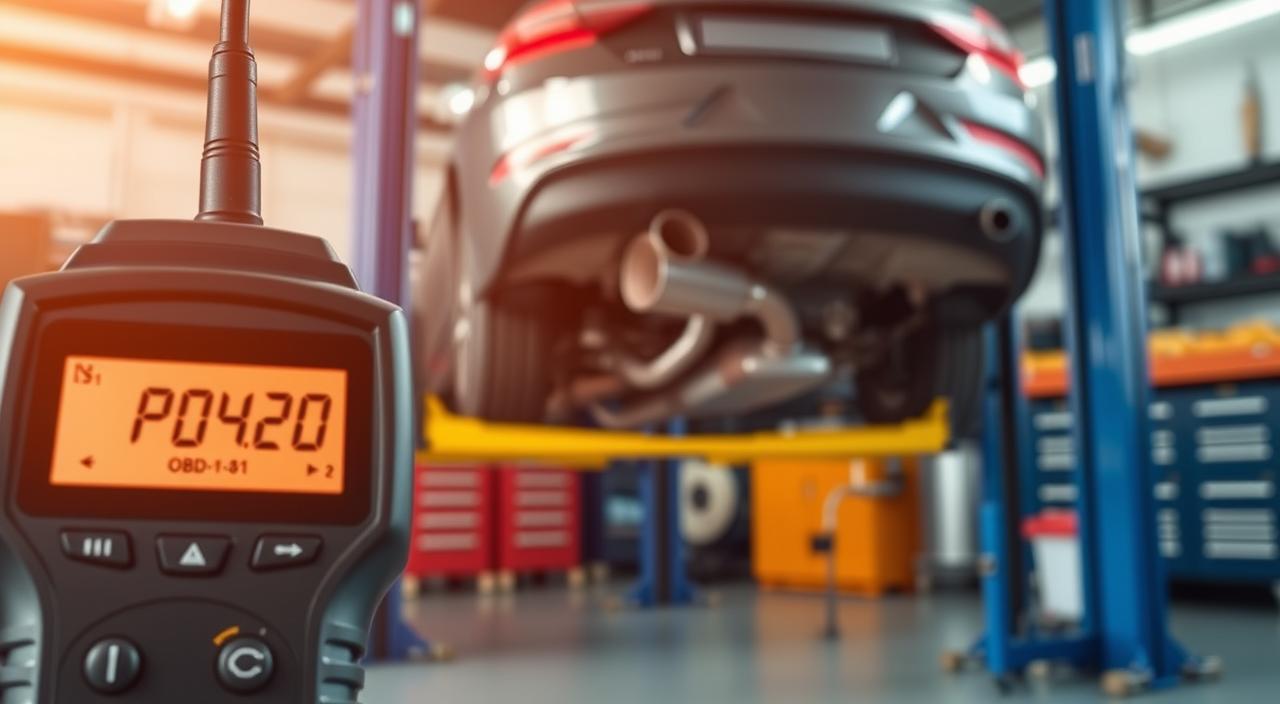
I recently found the engine code P0420. It made me wonder about its impact on cars and the environment.
The OBD-II code P0420 shows a problem with the catalyst system’s efficiency. This is in Bank 1. It can make your car run poorly and harm the air we breathe.
Knowing about this code is key for car owners. In this article, I’ll explain what the P0420 code means and why it matters.
Key Takeaways
- The P0420 code signifies a catalyst system efficiency issue.
- Bank 1 is specially affected by this problem.
- Understanding the code is vital for effective vehicle maintenance.
- The issue can impact both vehicle performance and emissions.
- Addressing the P0420 code is essential for environmental reasons.
What Does the P0420 Code Mean?
To understand the P0420 code, you need to know about your car’s emission system. This code means there’s a problem with the catalytic converter’s work.
Understanding OBD-II Diagnostic Trouble Codes
Modern cars use On-Board Diagnostics II (OBD-II) to check engine and emission systems. If a problem is found, a code is given. This code helps techs and car owners know what’s wrong.
Specific Meaning of P0420
The P0420 code is about the catalytic converter’s work in Bank 1 of the engine. This part is key to reducing harmful emissions. If it doesn’t work right, the code comes on.
| Code | Description | Common Cause |
|---|---|---|
| P0420 | Catalyst System Efficiency Below Threshold Bank 1 | Failing Catalytic Converter, Oxygen Sensor Issues |
P0420 Catalyst System Efficiency Below Threshold Bank 1: Understanding the Basics
To understand the P0420 code, knowing the basics of the catalytic converter system is key. The catalytic converter is a vital part of a car’s exhaust system. It helps reduce harmful emissions.
The Role of the Catalytic Converter
The catalytic converter is very important for the environment. It changes bad stuff like carbon monoxide and nitrogen oxides into good stuff like carbon dioxide and water.
Catalytic Converter Functionality:
| Pollutant | Conversion |
|---|---|
| Carbon Monoxide | Carbon Dioxide |
| Hydrocarbons | Water and Carbon Dioxide |
| Nitrogen Oxides | Nitrogen |
What «Bank 1» Refers To
«Bank 1» means the side of the engine where cylinder number one is. For straight engines, there’s just one bank. But for V-type engines, it’s the side with cylinder number one.
Knowing if your car has one or more banks is important. It helps fix problems with the P0420 code.
Common Symptoms of a P0420 Code
Knowing the signs of a P0420 code is key to fixing your car’s catalytic converter. This code means the catalyst system isn’t working right for Bank 1.
Check Engine Light Illumination
The first thing you’ll see is the check engine light on your dashboard. This light comes on because the OBD-II system found a problem with the catalytic converter. It’s showing a P0420 code.
Performance Issues
A bad catalytic converter can make your car run poorly. It might not go as fast or use fuel as well. You might feel your car hesitate or not accelerate right.
Increased Emissions
A P0420 code also means your car is polluting more than it should. This is because the catalytic converter isn’t working well. It’s not turning bad gases into cleaner ones like it should.

| Symptom | Description | Impact |
|---|---|---|
| Check Engine Light | Illumination of the check engine light due to detected malfunction | Immediate notification of a problem |
| Performance Issues | Reduced engine power and fuel efficiency | Affects driving experience and fuel costs |
| Increased Emissions | Higher levels of pollutants emitted | Environmental impact and potential for failing emissions tests |
Common Causes of the P0420 Code
Knowing why the P0420 code happens is key to fixing it. This code means the catalytic converter isn’t working right. Many things can make this happen.
Failing Catalytic Converter
A failing catalytic converter is a big reason for the P0420 code. It helps make the air cleaner by changing bad stuff into good stuff. But, it can get clogged or dirty over time. This makes it less effective. Replacing it might fix the problem, but check other things first.
Oxygen Sensor Problems
Oxygen sensor issues can also cause the P0420 code. This sensor checks the exhaust’s oxygen levels. If it’s wrong, the engine gets the wrong fuel mix. This hurts the catalytic converter’s work. Fixing or replacing the oxygen sensor can help.

Exhaust Leaks
Exhaust leaks can also lead to the P0420 code. They let extra air into the exhaust. This messes up the oxygen sensor and the converter’s work. Finding and fixing leaks can solve the problem.
Engine Performance Issues
Problems with the engine can also cause the P0420 code. Issues like bad spark plugs or clogged fuel injectors can mess up the fuel mix. This hurts the converter’s work. Fixing these engine problems can help fix the code.
Tools Needed for Diagnosis and Repair
To fix the P0420 code, you need the right tools. It’s important to have both diagnostic and repair tools ready.
Diagnostic Tools
Diagnostic tools help find the problem with the P0420 code. You’ll need:
- OBD-II Scanners: These scanners show detailed info about the error code and check engine parameters.
- Additional Testing Equipment: Tools like multimeters and oscilloscopes test oxygen sensors and electrical parts.
OBD-II Scanner Features
A good OBD-II scanner can read and clear codes. It also shows real-time data and tests the engine and other systems.
Additional Testing Equipment
A multimeter checks voltage and resistance. An oscilloscope looks at sensor waveforms.
Repair Tools
After finding the problem, you need the right tools to fix it. You’ll need:
- Basic Hand Tools: Tools like wrenches, pliers, and screwdrivers are often needed.
- Specialized Tools: Some repairs need special tools, like for removing catalytic converters.
Basic Hand Tools
Basic hand tools are useful for many repairs. They help with tasks like removing heat shields and replacing sensors.
Specialized Tools
Special tools are made for specific jobs. They help safely remove the catalytic converter without damage.

With the right tools, you can quickly find and fix the P0420 code. This keeps your vehicle running well.
Step-by-Step Diagnostic Process
To find the cause of a P0420 code, follow a few important steps. These steps help find the main problem.
Preliminary Checks
Start with some basic checks before getting into detailed diagnostics. These steps can show obvious problems or help with further checks.
Visual Inspection
First, look at the catalytic converter and nearby parts for damage or wear. Also, check for exhaust leaks. These can hurt the converter’s work.
Checking Service History
Look at the car’s service history for clues. See if there were recent repairs or maintenance on the exhaust or catalytic system.
Scanning for Additional Codes
Use an OBD-II scanner to find other trouble codes. Codes about oxygen sensors can help find the real problem.
For example, a sensor problem might mean it’s not the converter that’s the issue.
Testing Oxygen Sensor Operation
Oxygen sensors are key for checking exhaust gases. Testing them is important for diagnosing a P0420 code.
Upstream Sensor Testing
The upstream sensor checks gases before they hit the converter. Use a multimeter or oscilloscope to check its voltage. It should be in the right range.
Downstream Sensor Testing
The downstream sensor looks at gases after the converter. Test it to see if the converter is working right. Compare its readings with the upstream sensor’s.
«The oxygen sensor is a critical component in modern engine management systems, providing essential data for fuel injection and emissions control.» –
Automotive Engineering Handbook
Inspecting for Exhaust Leaks
Exhaust leaks can mess up the converter and cause a P0420 code. It’s important to check the exhaust system for leaks.
Leak Detection Methods
Use a smoke machine or a mechanic’s stethoscope to find leaks. Also, look closely at joints and seals for signs of leaks.
Common Leak Locations
Leaks often happen at joints, flanges, or damaged parts of the pipe. Check the areas around the converter and sensors closely.
| Component | Common Issues | Diagnostic Tips |
|---|---|---|
| Catalytic Converter | Clogging, internal damage | Check for backpressure, inspect for damage |
| Oxygen Sensors | Faulty sensor, wiring issues | Test voltage output, inspect wiring |
| Exhaust System | Leaks, damage | Use smoke machine, visual inspection |

By following these steps, you can find the cause of a P0420 code and know what repairs are needed.
How to Fix P0420 Code: Repair Options
To fix the P0420 code, find and fix the problem with the catalytic system. Once you know the cause, you can fix it. This will make the system work right again and clear the code.
Replacing the Catalytic Converter
If the diagnostic shows the catalytic converter is failing, you need to replace it. This part is key to reducing emissions. If it fails, emissions go up and car performance goes down.
OEM vs. Aftermarket Options
When you replace the converter, you can pick OEM or aftermarket parts. OEM parts fit perfectly and work best. Aftermarket parts might be cheaper but can be less reliable. Choose a good aftermarket brand if you go that route.
Installation Process
Replacing the converter takes a few steps:
- Remove exhaust parts to get to the converter
- Take the converter out of the exhaust system
- Put in the new converter
- Put back the exhaust parts
Replacing Faulty Oxygen Sensors
Oxygen sensor problems can also cause the P0420 code. If the sensor is bad, replacing it can fix the problem.
Identifying the Correct Sensor
Cars have many oxygen sensors. It’s important to find the right one to replace. Check your repair manual or ask a mechanic if you’re not sure.
Sensor Replacement Steps
To replace an oxygen sensor, do this:
- Find the sensor
- Disconnect the electrical connector
- Take out the sensor
- Put in the new sensor
- Reconnect the electrical connector
Repairing Exhaust Leaks
Exhaust leaks can also cause the P0420 code. Leaks let unmeasured air into the system, hurting the converter’s work.
Temporary Fixes
For small leaks, you can use a high-temperature sealant. But, this fix isn’t always good for a long time.
Permanent Repairs
For big leaks, you need to replace the damaged part. This could be a gasket or a piece of exhaust pipe. This fix lasts and keeps problems away.
Cost Considerations for P0420 Repairs
Knowing how much it costs to fix a P0420 code is key for car owners. The price can change a lot based on the problem and the fix needed.
Catalytic Converter Replacement Costs
Replacing the catalytic converter is a big expense. Prices can go from $300 to $1,500 or more. This depends on the car’s make and model.
A Honda Civic’s converter might cost about $400. But a Ford F-150’s could be over $1,000.
A study by the Automotive Research Association found the average cost in the U.S. is around $800. This shows how important it is to keep up with car maintenance.
| Vehicle Make | Catalytic Converter Cost | Labor Cost | Total Cost |
|---|---|---|---|
| Honda Civic | $400 | $200 | $600 |
| Ford F-150 | $1,000 | $300 | $1,300 |
| Toyota Corolla | $500 | $250 | $750 |
Oxygen Sensor Replacement Costs
Fixing a faulty oxygen sensor is cheaper. It costs between $100 and $300, including labor. This is much less than replacing a catalytic converter.
«Replacing an oxygen sensor is a straightforward process that can significantly improve a vehicle’s performance and fuel efficiency.» –
ASE Certified Mechanic
Labor Costs vs. DIY Savings
Labor costs can really add up. If a mechanic does the job, it can cost $100 to $500 or more. But, if you do it yourself, you can save a lot on labor.
For example, changing an oxygen sensor is easy for DIY fans. But, fixing a catalytic converter might need a pro. It’s because it’s more complex.
DIY vs. Professional Repair: What You Should Know
When you see a P0420 code, you must decide if you can fix it yourself or need a pro. This choice depends on how good you are at car repairs and how hard the problem is.
When You Can Fix It Yourself
If you know a bit about car repairs and have the right tools, you might fix the P0420 code yourself. DIY repairs can save money and feel good. First, check the oxygen sensor and exhaust system for damage or leaks.
Fixing a bad oxygen sensor or an exhaust leak might solve the problem.
When to Seek Professional Help
But if you’re not sure what to do or feel uneasy about fixing it, get a pro. A mechanic knows what to do and has the right tools. They can tell if you need a new catalytic converter, which is a big job.
Conclusion
Understanding the P0420 code is key to keeping your car running well. This code means there’s a problem with the catalyst system in Bank 1. We’ve talked about what causes it, how to spot it, and how to fix it.
To find and fix a P0420 code, you need to use special tools. These include diagnostic scanners and oxygen sensors. Knowing what’s wrong, like a bad catalytic converter or oxygen sensor, helps you fix it right.
Fixing a P0420 code can be a big job. But with the right info, you can do it. You might need to replace parts or fix leaks. It’s important to think about the cost and benefits of each fix.
This way, your car will run better and meet emissions rules. This can save you money over time.
FAQ
What does the P0420 code mean?
The P0420 code means the catalytic converter isn’t working right. It’s not reducing emissions as it should.
What are the symptoms of a P0420 code?
You might see the check engine light on. Your car might not run as well. And it could be making more pollution.
Can I drive my car with a P0420 code?
You can drive it, but it’s not a good idea. It might pollute more and run worse. It could also damage your engine or exhaust system.
What causes the P0420 code to appear?
It can happen for a few reasons. The catalytic converter might be failing. Or there could be oxygen sensor problems. Exhaust leaks or engine issues can also cause it.
How do I diagnose a P0420 code?
First, do some basic checks. Then, scan for more codes. Test the oxygen sensors and look for leaks. Use tools like an OBD-II scanner for this.
Can I fix the P0420 code myself?
You might be able to fix it by yourself. You could replace the catalytic converter or oxygen sensors. Or fix exhaust leaks. But if you’re not sure, it’s best to get help from a pro.
How much does it cost to repair a P0420 code?
The price depends on what’s wrong. Replacing the catalytic converter is pricey. But fixing oxygen sensors or leaks might cost less.
Will replacing the catalytic converter fix the P0420 code?
Replacing the catalytic converter might solve the problem. But first, you need to find out why it’s failing. This ensures you fix it right.
How can I prevent the P0420 code from appearing again?
Keep your car in good shape. Check and replace oxygen sensors when needed. Look for leaks in the exhaust. And fix any engine problems. This can stop the code from coming back.