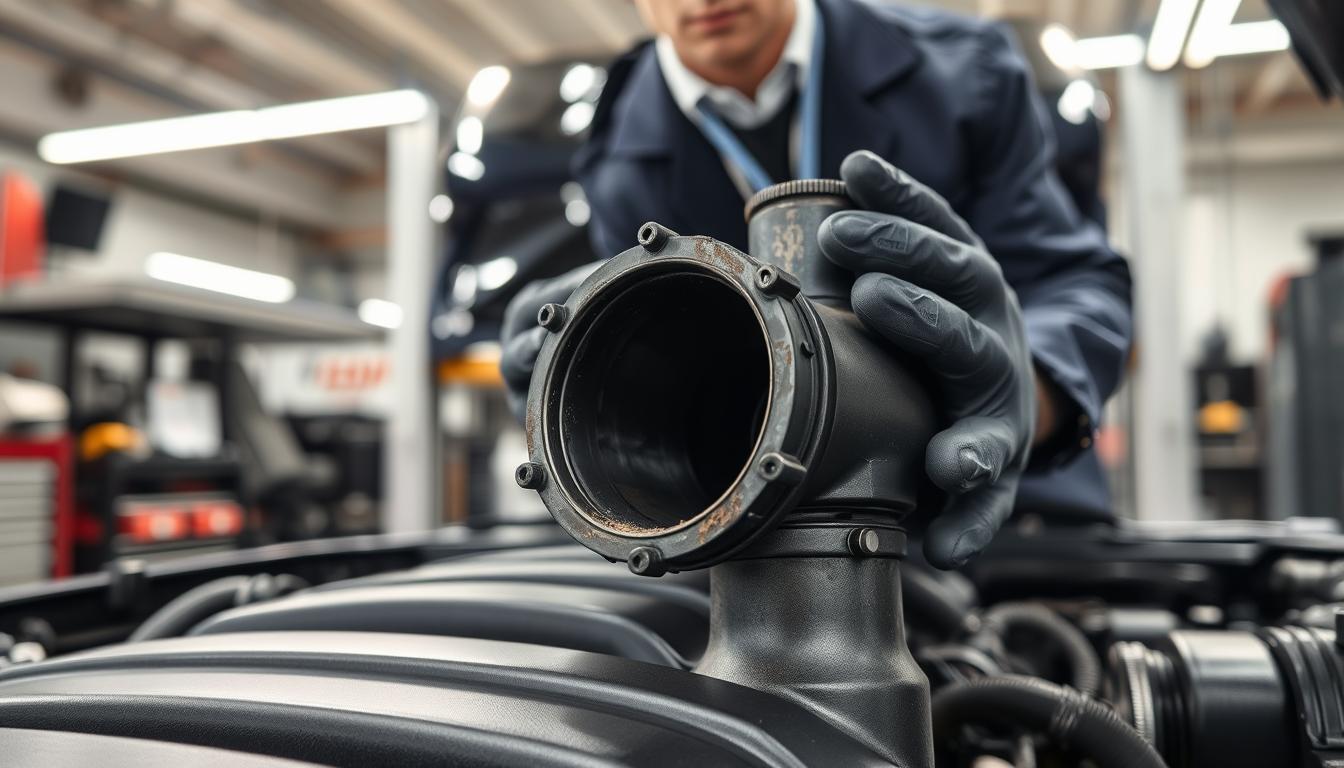
Have you seen the engine light on your car? It’s a common sight. The P0401 EGR flow insufficient detected error code is a big reason for it. This code means the Exhaust Gas Recirculation (EGR) system isn’t working right.
The EGR system helps cut down emissions and makes your engine run better. But if it’s not working, you might see lower fuel efficiency, rough idling, and even engine damage. In this article, I’ll help you understand why you get the P0401 error code. I’ll also share ways to fix it. By the end, you’ll know how to solve EGR valve problems and get your car running smoothly again.
What the P0401 Code Means
Understanding the P0401 code is key to fixing EGR system problems. This code shows the EGR system isn’t working right because of low flow.
Definition and Interpretation
The P0401 code means the EGR system isn’t sending enough exhaust gas back into the engine. This is important for cutting down on harmful emissions. It happens when the EGR flow is too low, pointing to a problem in the system or its parts.
The OBD-II Diagnostic System
The OBD-II system watches over the engine, including the EGR system. If it finds a problem, like low EGR flow, it sends out a code like P0401. This code helps mechanics find and fix the issue.

Severity Level of This Code
The P0401 code’s severity can change based on the vehicle and how it’s used. But, ignoring it can cause more emissions, hurt engine performance, and damage other engine parts.
| Code | Description | Severity Level |
|---|---|---|
| P0401 | EGR Flow Insufficient Detected | Moderate to High |
How the EGR System Functions
The Exhaust Gas Recirculation (EGR) system helps cut down on harmful emissions. It does this by sending some exhaust gas back into the engine. This lowers the temperature of the combustion, which in turn reduces harmful emissions.
Purpose of Exhaust Gas Recirculation
The main goal of the EGR system is to cut down on NOx emissions. These emissions are bad for the environment and our health. The EGR system mixes exhaust gas with the air-fuel mix to make combustion more efficient.
Key Components of an EGR System
The EGR system has important parts like the EGR valve and solenoid. The EGR valve controls how much exhaust gas goes into the intake manifold. Keeping the EGR system clean is key to avoiding problems.

EGR Valve Operation Principles
The EGR valve works based on signals from the Powertrain Control Module (PCM). It opens to let exhaust gas mix with the air-fuel mix. This mix is carefully controlled to keep the engine running well and emissions low.
How the PCM Monitors EGR Flow
The PCM checks EGR flow with help from sensors like the DPFE sensor. If it finds too little EGR flow, it sets off a fault code. This code means there’s a problem with the EGR system that needs fixing.
Experts say a good EGR system is key for meeting emissions standards and keeping the engine running long. Regular checks and upkeep of the EGR system help avoid problems and keep emissions in check.
Common Causes of P0401 EGR Flow Insufficient Detected
To fix the P0401 code, we need to know why EGR flow is bad. The EGR system helps cut down on harmful emissions. If it breaks, the engine might not work right.

Carbon Buildup and Clogged Passages
Carbon buildup is a big problem in the EGR system. It blocks the flow of exhaust gases over time. This buildup makes the system less effective, causing the P0401 code.
Malfunctioning EGR Valve
The EGR valve controls how exhaust gases flow. If it doesn’t work right, it can cause problems. Keeping it clean is key to avoiding issues.
DPFE Sensor Failures
The DPFE sensor checks the pressure in the EGR system. If it fails, it can send wrong signals. This can make the engine run poorly.
«A faulty DPFE sensor can cause the EGR system to malfunction, resulting in decreased engine performance.» – Automotive Expert
EGR Solenoid and Control Circuit Issues
The EGR solenoid helps the valve work right. Problems with it can stop the valve from working. Fixing these issues is important.
Vacuum Line Leaks or Restrictions
Leaks or blockages in vacuum lines can also cause problems. They stop the EGR valve from working right. Checking these lines is a must.
Knowing these common problems helps fix the P0401 code. It makes sure the EGR system works well and the engine runs smoothly.
Recognizing Symptoms of Insufficient EGR Flow
It’s important to know the signs of EGR flow problems. This helps keep your engine running well. If the EGR system doesn’t work right, you’ll see some signs.
Check Engine Light Activation
The check engine light on your dashboard is a big clue. It means there’s a problem with the EGR system. You might see a code like P0401, which means there’s not enough EGR flow.
Engine Performance Problems
Not enough EGR flow can make your engine run poorly. You might notice it idling rough, hesitating when you press the gas, or feeling weaker. This is because the engine isn’t getting the right mix of exhaust and air.

Knocking or Pinging Sounds
Bad EGR flow can cause your engine to knock or ping, mostly when you’re speeding up. This is because the engine isn’t burning fuel right because of the EGR problem.
Failed Emissions Testing
Car troubles with the EGR system can also mean you’ll fail emissions tests. This is because the system helps keep harmful emissions down.
Increased Fuel Consumption
Lastly, not enough EGR flow might make your car use more fuel. This is because the engine might use more fuel to make up for the EGR issue.
| Symptom | Description |
|---|---|
| Check Engine Light | Illumination of the check engine light, often with DTC P0401 |
| Engine Performance Issues | Rough idling, hesitation, and decreased engine power |
| Knocking or Pinging | Knocking sounds during acceleration due to improper combustion |
| Failed Emissions | Failure in emissions testing due to increased NOx emissions |
| Increased Fuel Consumption | Higher fuel consumption due to richer engine running conditions |
Essential Tools for P0401 Diagnosis
To fix the P0401 code, you need the right tools. Finding EGR flow problems needs special and common tools.
OBD-II Scanner Requirements
A good OBD-II scanner is your first tool. It should read codes, show freeze frame data, and do basic tests. Make sure it supports your car’s OBD-II protocols.
Mechanical Tools Needed
You’ll need wrenches, pliers, and screwdrivers for EGR system checks. Have a full toolkit ready.
Vacuum Testing Equipment
If your car uses vacuum for EGR, you’ll need a vacuum pump and gauge. They help check the system.
Cleaning Supplies and Solvents
You’ll need cleaning stuff like solvents and brushes. They help clean clogged EGR parts.
Safety Equipment
Remember safety glasses, gloves, and a fire extinguisher. Safety is key when working on cars.
Comprehensive Diagnostic Process
To fix the P0401 code, techs follow a detailed plan. They check several things to find the main problem.
Initial Code Verification and Freeze Frame Data
First, they use an OBD-II scanner to check for the P0401 code. They also look at freeze frame data. This shows what happened when the code was set.
Visual Inspection Protocol
Then, they do a close look to see if anything is wrong. They check for damaged EGR passages, bad wiring, or vacuum leaks. This helps them find problems fast.
Testing EGR Valve Operation
Next, they test the EGR valve to make sure it works right. They might use a scan tool or vacuum to check it.
Vacuum System Integrity Checks
They also check the vacuum system for leaks or blockages. Vacuum problems can hurt EGR flow. They look at vacuum hoses, connections, and the EGR solenoid for damage.
DPFE Sensor and Circuit Testing
Then, they test the DPFE sensor and its circuit. A bad DPFE sensor can send wrong signals to the PCM, causing the P0401 code.
PCM and Wiring Harness Examination
Last, they check the PCM and wiring for damage or corrosion. Problems here can mess up the EGR system, leading to the P0401 code.
| Diagnostic Step | Purpose | Tools Required |
|---|---|---|
| Initial Code Verification | Confirm P0401 code presence | OBD-II Scanner |
| Visual Inspection | Identify obvious issues | Inspection lights, tools |
| EGR Valve Testing | Ensure proper EGR valve operation | Scan tool, vacuum pump |
Step-by-Step Solutions for P0401 EGR Flow Insufficient Detected
To fix the P0401 error, know the causes and use good repair methods. The EGR system helps cut down on harmful emissions. If it doesn’t work right, your engine might not run well and pollute more.
EGR Valve and Passage Cleaning Procedure
Cleaning the EGR valve and passages is key to solving the P0401 error. This removes carbon buildup that blocks gas flow.
Required Materials and Safety Precautions
First, get the right tools like a cleaning solution, soft brush, and safety goggles. Make sure the engine is cool and off before starting.
Disassembly and Cleaning Steps
Take apart the EGR valve carefully. Soak parts in a cleaning solution to break up carbon. Then, use a soft brush to clean off any left-over dirt. Put everything back together, making sure it fits right.
EGR Valve Replacement Guide
If cleaning doesn’t work, you might need a new EGR valve. This means taking out the old one and putting in a new one.
Removal Process
First, disconnect the electrical and vacuum lines from the valve. Then, remove the bolts or nuts holding it in place. Carefully pull the valve away from the engine to avoid damage.
Installation Best Practices
Put the new valve in, making sure it’s seated and bolted down right. Reconnect the electrical and vacuum lines. Check that everything is tight to avoid problems later.
Vacuum Line Repair Techniques
Check the vacuum lines for damage or leaks. Fix or replace any bad lines to keep the system working right.
DPFE Sensor Replacement
A bad DPFE sensor can cause the P0401 error. To replace it, disconnect the electrical connector and take out the old sensor. Put in a new one, making sure it’s secure and connected.
Control Circuit Troubleshooting
The control circuit is important for the EGR system. Check for wiring or connection problems. Use a multimeter to check for voltage and resistance. Fix or replace any broken parts.
Vehicle-Specific EGR Systems and Common Issues
The Exhaust Gas Recirculation (EGR) system is the same everywhere, but it looks different in each car. Knowing these differences helps fix EGR problems better.
Ford, GM, and Chrysler EGR Designs
Ford, GM, and Chrysler make EGR systems in their own ways. Ford uses a special sensor to check EGR flow. GM cars have a linear EGR valve controlled by the engine computer. Chrysler’s EGR systems can be different, like a vacuum-controlled valve. Knowing these helps fix egr valve problems.
Toyota, Honda, and Nissan Systems
Toyota, Honda, and Nissan have their own EGR designs. Toyota’s EGR systems use a vacuum-controlled valve. Honda’s EGR is electronic. Nissan’s EGR system checks exhaust pressure. Knowing these helps with egr system maintenance.
European Manufacturer Variations
European cars like Volkswagen, BMW, and Mercedes-Benz have special EGR systems. They use cool EGR systems to save fuel and cut down emissions. But, they can be tricky to fix and need special tools.
Diesel vs. Gasoline EGR Differences
Diesel and gasoline EGR systems are different. Diesel systems work with higher pressures and temperatures. They need stronger parts and special fixes. Gasoline EGR systems are simpler but still need careful control to work right.
In short, knowing how each car’s EGR system works is key. This knowledge helps fix egr valve problems and keep engines running well. It also helps meet emissions rules.
Environmental and Performance Implications
When the engine light code P0401 shows up, it’s a big deal. It affects how clean your car is and how well it runs. The Exhaust Gas Recirculation (EGR) system helps keep the air clean by reducing harmful emissions. If it breaks, it can hurt the environment and your car’s performance.
NOx Emissions Impact
Not enough EGR flow means more harmful emissions. This makes the air worse and harms our planet. The Environmental Protection Agency (EPA) says cutting down on these emissions is key to cleaner air and better health. So, fixing the P0401 code is important for our planet.
Engine Damage Risks
Signs like engine knocking or pinging can damage your engine if ignored. Not fixing these signs can cost a lot. It might hurt your engine’s parts, like cylinders or valves.
Fuel Economy Effects
Not enough EGR flow can also make your car use more fuel. The engine computer (ECU) might change settings to try to fix it. This can make your car use more gas.
Legal Compliance Concerns
Cars with the P0401 code might not pass emissions tests. This can cause legal problems.
«Vehicles must comply with emissions standards to be considered roadworthy,»
as the law says in many places, like the United States.
Preventative Maintenance Strategies
To avoid P0401 EGR Flow Insufficient Detected, it’s key to use preventative care. Regular checks can spot problems early. This way, you can fix them before they get worse.
Recommended Inspection Intervals
Make sure to check your EGR system as recommended. This is usually every 50,000 to 100,000 miles. Regular checks stop carbon buildup and other issues that cause the P0401 code.
Fuel Quality Considerations
Good fuel quality is important for your EGR system. Bad fuel can cause carbon buildup. This can block EGR passages and valves. Choosing good fuel brands and using fuel additives can help.
Driving Habits That Minimize EGR Issues
How you drive affects your EGR system. Short trips can cause carbon buildup. Long drives help burn off these deposits.
Complementary System Maintenance
Keeping other engine systems in check is also important. A well-kept engine runs better and makes fewer emissions. This reduces EGR system strain. As an expert once said,
«A well-maintained engine is the backbone of a vehicle’s overall health.»
Conclusion
Understanding the P0401 EGR flow error is key for your car’s health. We’ve looked at why it happens, what it means, and how to fix it.
To find and fix the P0401 code, you need a good plan. First, check the code and look at the EGR system. Then, test the EGR valve and DPFE sensor. This helps you find and fix the problem.
Keeping your car in good shape helps avoid EGR problems. Check the EGR system often, use good fuel, and drive smart. This makes your car run better and cleaner.
With what you’ve learned, you can fix the P0401 EGR flow error. This makes your car run well and is good for the environment. When you’re ready to tackle the P0401 code, you’ll know what to do.
FAQ
What does the P0401 EGR flow insufficient detected code mean?
The P0401 code means the engine’s computer found a problem. It’s about the Exhaust Gas Recirculation (EGR) system. This system helps cut down on harmful emissions.
Can a faulty EGR valve cause the P0401 code?
Yes, a bad EGR valve can cause this code. It stops the exhaust gases from flowing right into the engine.
How do I diagnose the P0401 code?
First, use an OBD-II scanner to check the code. Then, look at the EGR system with your eyes. Test the EGR valve and make sure the vacuum system works well.
What are the symptoms of insufficient EGR flow?
Signs include a check engine light, poor engine performance, and strange sounds. You might also fail emissions tests and use more fuel.
Can I drive my vehicle with the P0401 code?
You can drive with this code, but it’s not good. It can make your car pollute more, damage the engine, and waste fuel. Fix it fast.
How do I clean the EGR valve and passages?
To clean the EGR, take it apart. Soak parts in a cleaning solution. Use a brush to get rid of dirt. Then, put it back together and test it.
What are the benefits of maintaining the EGR system?
Keeping the EGR system in check helps a lot. It stops problems like the P0401 code, cuts emissions, and makes your engine run better. It also saves fuel.
Are there any driving habits that can minimize EGR issues?
Yes, good driving habits help. Avoid extreme temperatures and don’t ignore engine problems. Regular maintenance also helps a lot.