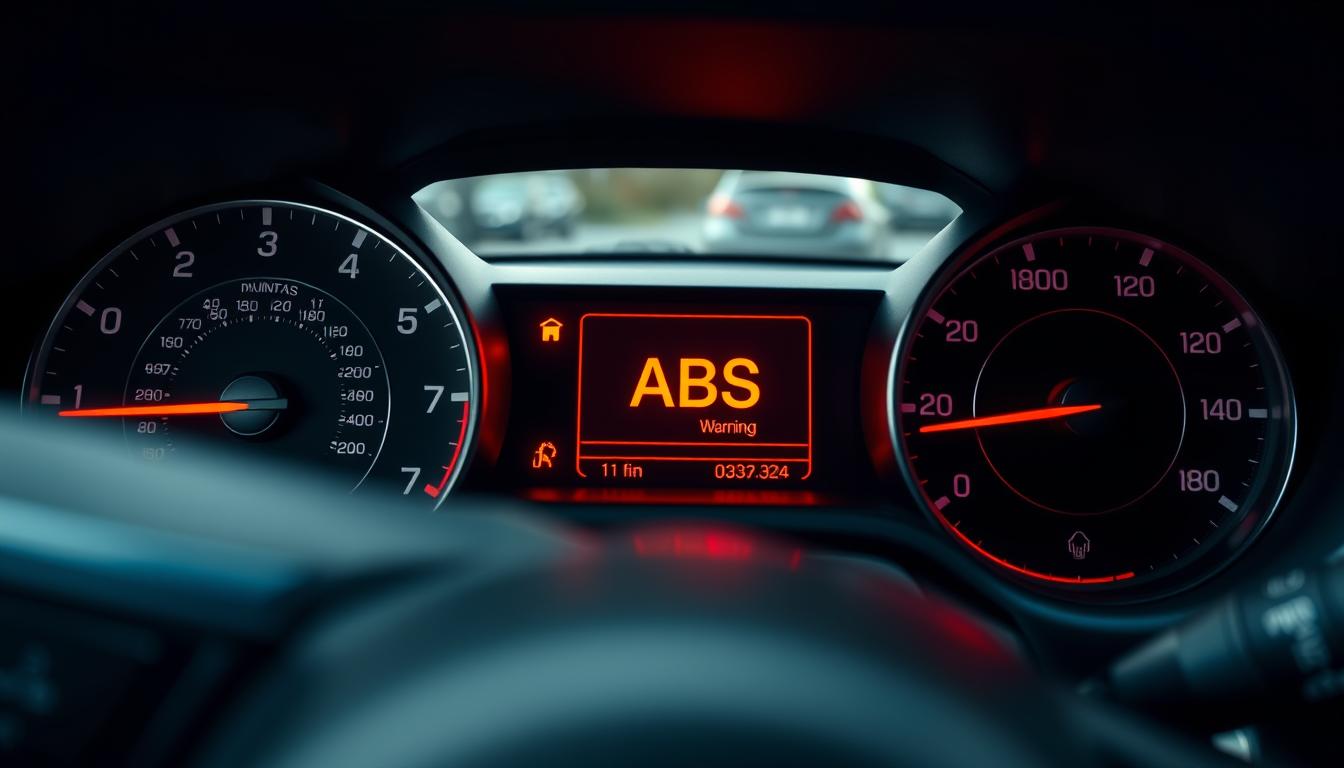
I had a problem with my car’s ABS warning light staying on. It made me think about how important it is to know what this light means.
The ABS warning light is a key safety feature in cars today. It warns of a problem with the Anti-lock Braking System.
In this article, I’ll show you the signs of a lit ABS warning light. I’ll also share how to figure out the problem.
Key Takeaways
- Common causes of an illuminated ABS warning light
- Symptoms associated with ABS malfunction
- Steps to diagnose ABS issues
- Importance of addressing ABS problems promptly
- Potential consequences of ignoring the ABS warning light
Understanding the ABS System and Its Importance
The Anti-lock Braking System (ABS) is key for car safety. It’s found in most cars today. I’ll explain what it does, why it’s important, and its parts.
What is the Anti-lock Braking System?
ABS stops wheels from locking up when you brake hard. It makes the tires stay on the road. This lets you steer safely.
How ABS Improves Vehicle Safety
ABS makes cars safer by stopping skidding. It helps keep control when you brake fast. This is very helpful on slippery or bumpy roads.
Key benefits of ABS include:
- Shorter stopping distance on different roads
- Better steering when braking hard
- More stable car overall
Components of a Typical ABS System
An ABS system has important parts that work together. These are:
- Speed sensors at each wheel
- Electronic Control Unit (ECU)
- ABS pump and valves
- Brake lines and modulators
Knowing these parts helps fix ABS problems. Like when the ABS warning light turns on.
ABS Warning Light On: Symptoms and Diagnosis
When the ABS warning light comes on, it means your car’s brakes are not working right. Knowing what this light looks like and the signs it shows can help you find the problem.
What the ABS Warning Light Looks Like
The ABS warning light shows as «ABS» or a circle with «ABS» inside. It might also have a car symbol or just a yellow or amber light. This light is different from others on your dashboard.
Common Symptoms Accompanying an Illuminated ABS Light
Seeing the ABS light can mean several things. You might notice:
- Pulsating brake pedal
- Spongy brake pedal
- Grinding or squealing noises when applying the brakes
- ABS not working right when you brake hard
These signs could mean a problem with the ABS system. It might be a bad wheel speed sensor or low brake fluid.
Initial Steps When You See the Warning Light
Here’s what to do if the ABS light comes on:
| Step | Description |
|---|---|
| 1 | Check the brake fluid level to ensure it’s at the recommended level. |
| 2 | Inspect the ABS sensors and wiring for any signs of damage. |
| 3 | Use an OBD-II scanner to check for any trouble codes related to the ABS system. |
These steps can help you find out why the ABS light is on. They can also guide you to the right repairs.
Common Causes of an Illuminated ABS Warning Light
When the ABS warning light comes on, it means something’s wrong. It could be a simple problem or a big issue with the system. The anti-lock braking system is very important for safety. So, it’s key to fix any problems quickly.
Faulty ABS Wheel Speed Sensors
One big reason for the ABS light is bad wheel speed sensors. These sensors check how fast each wheel is going. If they’re not working right, the ABS system can fail, and the light will turn on.
ABS Module Issues
The ABS module is like the brain of the system. Problems with it, like software bugs or hardware failures, can make the light come on. Sometimes, the module needs to be fixed or replaced.
Low Brake Fluid or Pressure
Not enough brake fluid or low pressure can also cause the light to come on. It’s important to check the brake fluid level. Any leaks or problems with the brake master cylinder can cause low pressure.
Damaged ABS Rings
ABS rings help the system work right. If they’re damaged or worn out, the system can fail. This makes the light turn on.
Electrical Problems and Wiring Issues
Electrical problems, like bad wiring or fuses, can also cause issues. These problems can make the ABS light come on. Checking the wiring and connectors for damage is a good first step.
| Cause | Description | Common Symptoms |
|---|---|---|
| Faulty ABS Wheel Speed Sensors | Malfunctioning sensors causing incorrect speed readings | ABS warning light on, possible ABS system malfunction |
| ABS Module Issues | Problems with the ABS control module | ABS warning light on, potential loss of ABS functionality |
| Low Brake Fluid or Pressure | Insufficient brake fluid or pressure issues | ABS warning light on, soft brake pedal, brake warning light |
| Damaged ABS Rings | Damaged or worn-out ABS tone rings | ABS warning light on, erratic ABS behavior |
| Electrical Problems and Wiring Issues | Corrosion, damage, or faults in wiring and connectors | ABS warning light on, intermittent ABS operation |
Is It Safe to Drive with the ABS Light On?
Seeing the ABS warning light on your dashboard makes you wonder if it’s okay to keep driving. The Anti-lock Braking System (ABS) stops wheels from locking up when you brake hard. This helps you keep control and avoid skidding.
Understanding the Safety Implications
Driving with the ABS light on can be risky. If the ABS system isn’t working right, your car might not stop as well. This could make accidents more likely.

Short-term vs. Long-term Risks
Driving with a bad ABS system might not cause big problems right away. But, it can make accidents more likely, especially when you brake hard. If you ignore the problem, it could get worse and damage other parts of your brakes.
When to Stop Driving Immediately
If your brake pedal feels funny or you hear strange noises, stop driving right away. If the ABS light is on with other warning lights, it’s also a big warning sign. Driving then could be very dangerous for you and others.
In short, it’s not a good idea to keep driving with the ABS light on. It’s better to be safe and get your car checked by a pro. This way, you can avoid big risks and keep everyone safe on the road.
DIY Diagnosis: Tools and Methods
To fix an ABS warning light, start by getting the right tools. The right tools make finding problems easier.
Using OBD-II Scanners for ABS Diagnosis
An OBD-II scanner is key for ABS problems. It reads codes that tell you what’s wrong.
Basic vs. Advanced Scanners
OBD-II scanners come in types. Basic scanners read simple codes. Advanced scanners give more info, like special codes and live data.
- Basic scanners are good for simple checks.
- Advanced scanners help with harder problems.
How to Read and Interpret ABS Codes
After getting codes, you need to understand them. ABS codes start with a letter and numbers. For example, «C1100» is common. Knowing these codes helps find the problem.
Visual Inspection Techniques
Visual checks are also important. Look at ABS sensors, wiring, and parts for damage or wear.
- Look for dirt or damage on ABS sensors.
- Check wiring for wear or rust.
- Check ABS rings for damage or if they’re off.
Testing ABS Sensors at Home
You can test ABS sensors at home with a multimeter. It checks if the sensor works right. A good sensor has a certain resistance, but it varies by car.
To test the ABS sensor:
- Take off the sensor.
- Use a multimeter to check resistance.
- See if it matches the car’s specs.
With these steps, you can find and fix ABS warning light problems yourself.
ABS Warning Light Troubleshooting Steps
Fixing the ABS warning light needs a careful plan. This light means your car’s Anti-lock Braking System (ABS) might have a problem.
Systematic Approach to Troubleshooting
When the ABS light comes on, you need to check everything. Look at each part of the ABS system to find the problem.
- First, check the ABS fuse to see if it’s blown.
- Then, look at the ABS wiring and connections for damage or rust.
- Use an OBD-II scanner to find any trouble codes in your car’s computer.
Checking Fuses and Relays
Fuses and relays are key for the ABS system. If they’re not working right, the ABS light will turn on.
Steps to check fuses and relays:
- Find the fuse box and look for the ABS fuse.
- Check the fuse for damage or if it’s blown.
- If it’s blown, replace it and see if the ABS light goes off.
- Also, check the ABS relay and replace it if it’s bad.
Inspecting Wheel Speed Sensors
Wheel speed sensors are very important. They watch how fast each wheel is going and send this info to the ABS module.
To inspect wheel speed sensors:
- Look at the sensors for damage or rust.
- Check the wiring for any damage or wear.
- Use a multimeter to test the sensor’s resistance and voltage.

Testing the ABS Pump and Module
The ABS pump and module control the ABS system. Testing them needs special tools.
Steps to test the ABS pump and module:
- Use a scan tool to watch the ABS system and look for trouble codes.
- Do a visual check of the ABS pump and module for leaks or damage.
- If you’re not sure, ask a professional mechanic for help.
Professional Diagnosis When ABS Light Stays On
When the ABS light stays on, it means you might have a big problem. You can try to fix it yourself, but sometimes you need a pro.
When to Seek Professional Help
If you’ve tried to fix it and the light is still on, get a mechanic. If you’re not sure how to do it or if your car is still under warranty, a pro is best.
What to Expect During a Professional Diagnosis
A mechanic will use special tools to find the problem. They will check the ABS system, including sensors and wiring.
Average Costs of Professional ABS Diagnostics
The cost depends on your car and the problem. Here are some average prices:
| Service | Average Cost |
|---|---|
| ABS Diagnostic Fee | $100-$150 |
| ABS Sensor Replacement | $200-$500 |
| ABS Module Repair/Replacement | $500-$1000 |
Knowing these prices helps you plan for your car’s care.
Fixing Common ABS Problems
Fixing ABS problems quickly is important. I’ll help you with common fixes. The ABS warning light means you need to check something.
Replacing ABS Sensors
One big problem is a bad ABS sensor. You need to pick the right part and replace it carefully.
Parts Selection Guide
Choosing the right ABS sensor is key. Check your car’s manual or talk to a parts supplier for the right fit.
Step-by-Step Replacement Process
Here’s how to replace an ABS sensor:
- Find the bad sensor
- Take off the electrical connector
- Remove the sensor’s bolt
- Put in the new sensor
Addressing Wiring and Connection Issues
Wiring and connection problems can turn on the ABS light. Check for damage or corrosion and make sure connections are tight.
ABS Module Repair or Replacement
Sometimes, the ABS module needs fixing or replacing. This is a tough job that might need a pro, especially for reprogramming.
«The ABS module is a critical component, and any issues with it can significantly impact vehicle safety.» – Automotive Expert
Dealing with ABS Ring Problems
ABS ring problems, like damage or wear, can mess up the ABS system. Check and replace the ABS ring when needed to keep the system working right.
Fixing these common ABS problems keeps your car safe. If you’re not sure about anything, it’s best to get help from a pro.
Conclusion
I showed you how important the Anti-lock Braking System (ABS) is. An ABS warning light on your dashboard is not just a problem. It’s a sign of a serious issue with your car’s brakes.
The ABS light is a warning. It tells you something is wrong with your car’s brakes. Knowing what to look for can help you fix it fast.
ABS problems can be caused by many things. This includes bad sensors or a faulty ABS module. Knowing how to find and fix these problems can save you a lot of trouble and money.
If you’re not sure how to fix it yourself, don’t worry. You can always ask a professional for help.
In short, knowing about ABS warning lights helps you keep your car safe. By paying attention and fixing problems quickly, you avoid bigger issues.
FAQ
What does it mean when my ABS warning light stays on?
If your ABS warning light stays on, it means there’s a problem. This could be with the ABS wheel speed sensor or the ABS module. It might also be an electrical issue.
Can I drive my vehicle with the ABS light on?
You can still drive with the ABS light on, but it’s not safe. The ABS system is key to your safety. Without it, you’re at higher risk of accidents.
How do I diagnose an ABS warning light issue?
To find out why your ABS light is on, use an OBD-II scanner. You’ll also need to look at the ABS system and test the sensors at home.
What are some common causes of an illuminated ABS warning light?
Many things can cause the ABS light to come on. These include bad ABS sensors, problems with the ABS module, low brake fluid, damaged ABS rings, and electrical issues.
How do I reset my ABS warning light?
To reset the ABS light, use an OBD-II scanner to clear the codes. But, if the problem isn’t fixed, the light will likely turn back on.
Can I replace ABS sensors myself?
Yes, you can replace ABS sensors by yourself. Just make sure to follow the right steps and get the correct parts for your car.
How much does it cost to diagnose and repair ABS problems?
The cost to fix ABS problems varies a lot. It depends on the problem and the parts and labor needed. On average, it can cost between $100 and $300 for a professional diagnosis.
What should I expect during a professional ABS diagnosis?
A mechanic will use special tools to read ABS codes and test the system during a diagnosis. They’ll also check the wiring and connections.