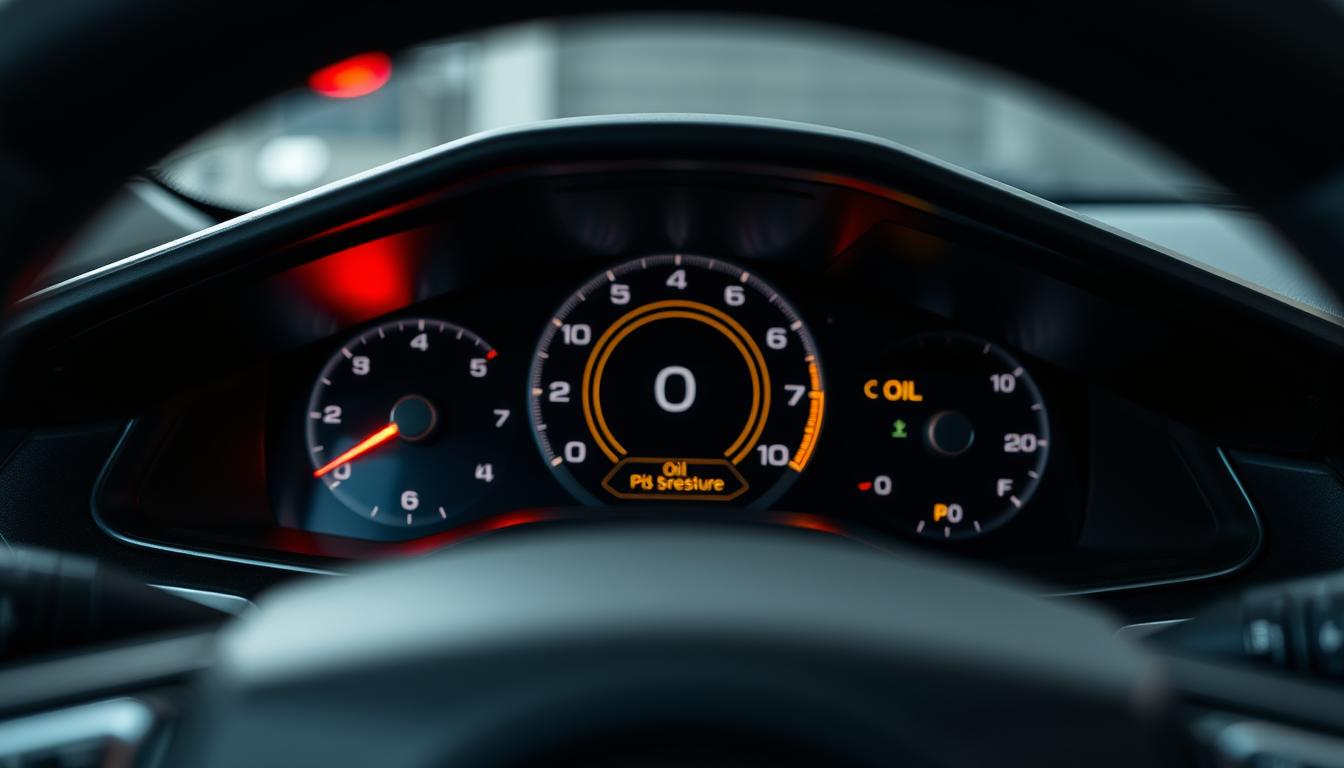
I’ve often been confused by the warning lights on my car’s dashboard. The red oil pressure light and the yellow oil level light are two that puzzle me. They show different problems with my car’s engine.
In this article, I’ll explain what these lights mean for my car’s health. Knowing the difference helps me take the right steps to keep my car safe.
Key Takeaways
- Recognizing the difference between the red oil pressure light and the yellow oil level light.
- Understanding the implications of each light on your vehicle’s engine.
- Learning the appropriate actions to take when either light appears.
- The importance of regular vehicle maintenance.
- How to use your car’s dashboard warning lights to your advantage.
Understanding Dashboard Warning Lights
It’s key for every driver to know about dashboard warning lights. These lights tell you about problems with your car. They can be small or serious.
The Importance of Dashboard Indicators
Dashboard indicators talk to you about your car’s health. They tell you about the engine, oil, and temperature. Not paying attention can harm your engine or make driving unsafe.
Key benefits of dashboard indicators include:
- Early detection of potential issues
- Enhanced safety on the road
- Better maintenance and reduced repair costs
How to Identify Oil-Related Warning Lights
Oil-related warning lights show your engine’s health. There are two main lights: the oil pressure light and the oil level light.
Common Symbols and Their Meanings
Common symbols include:
- A red oil can symbol, often indicating low oil pressure
- A yellow oil can symbol, typically signifying low oil level
Red Oil Pressure Light vs Yellow Oil Level Light: Key Differences
It’s important to know the difference between the red oil pressure light and the yellow oil level light. These lights on your dashboard warn you about your engine’s health.
Color Coding in Vehicle Warning Systems
Vehicle warning systems use colors to show how serious a problem is. Red lights mean big problems that need fixing right away. Yellow lights show smaller issues that still need fixing.
Urgency Levels: Red vs Yellow Alerts
The red oil pressure light warns of a serious oil pressure problem. It tells you to stop driving as soon as it’s safe. The yellow oil level light means your oil is low. It’s important, but you don’t have to stop driving right away.
Manufacturer-Specific Variations
But, different car makers might see these colors a bit differently. Still, the main idea is the same for most cars.
| Warning Light | Meaning | Urgency Level |
|---|---|---|
| Red Oil Pressure Light | Critical oil pressure issue | High – Stop driving as soon as safe |
| Yellow Oil Level Light | Low oil level | Moderate – Check oil level and top up as needed |
What the Red Oil Pressure Light Indicates
The red oil pressure light is a warning. It shows your engine’s oil pressure is too low. This can cause serious damage if not fixed fast.
Common Causes of Low Oil Pressure
Low oil pressure can happen for a few reasons:
- Low oil level due to leakage or not changing oil enough
- Worn or damaged oil pump
- Clogged oil filter or oil passages
- Excessive engine wear, especially in bearings or camshaft
Finding out why oil pressure is low is key to avoid engine damage.
Potential Damage from Ignoring This Warning
Ignoring the red oil pressure light can cause big engine problems. Engine seizure is a big risk when the engine isn’t lubricated right.
Engine Seizure Risk Assessment
Engine seizure happens when parts lock up because of no lubrication. This causes a lot of damage. The risk is high because:
- Long-term low oil pressure can cause metal parts to rub together.
- This rubbing makes a lot of heat and friction, leading to engine seizure.
- Engine seizure can mean expensive fixes or needing a new engine.
The image below shows dashboard warning lights. They are meant to alert you and make you act fast.
Fixing the red oil pressure light quickly is important. Regular checks and quick fixes help keep your engine running well.
What the Yellow Oil Level Light Means
When the yellow oil light comes on, it means your car’s oil is low. This light is part of a system that keeps your engine running well. It warns you when the oil level is not right.
Understanding Oil Level Monitoring Systems
Today’s cars have smart oil level systems. These systems watch the oil level all the time. They turn on the yellow light if the oil gets too low.
When to Be Concerned About Oil Levels
Some oil loss is okay, but too much is not. Checking your oil often helps spot problems early.
Normal Oil Consumption vs. Problematic Loss
How much oil your car uses depends on the car. But, it should not use more than one quart every 1,000 to 2,000 miles. If it uses more, it might mean there’s a leak or engine problem.
| Oil Consumption Rate | Indication |
|---|---|
| 1 quart per 1,000 to 2,000 miles | Normal |
| More than 1 quart per 1,000 miles | Potential issue; investigate further |
Knowing what the yellow oil light means helps. Regular oil checks keep your engine safe and your car running well.
Immediate Actions When the Red Oil Pressure Light Illuminates
If your car’s red oil pressure light turns on, act fast to protect your engine. This light means your engine’s oil pressure is too low. If not fixed quickly, it could harm your engine a lot.
Step-by-Step Emergency Response
First, stay calm and pull over to a safe place as soon as it’s safe. Turn off the engine to stop more damage. Then, check your oil level to see if it’s low.
If the oil is low, don’t try to drive to a service station. Call for roadside help instead.
When to Pull Over Immediately
If the red oil pressure light turns on while driving, pull over right away if it’s safe. If you’re on a busy road, slow down and move to the side or to a service station. It’s urgent because low oil pressure can cause engine seizure, which is very expensive to fix.
Calling for Roadside Assistance
After pulling over, call for roadside assistance or a tow truck if you can’t fix it yourself. Many auto insurance and car clubs offer roadside help.
Temporary Measures to Protect Your Engine
If you can’t get help right away, check your owner’s manual for advice. Some cars have tips for quick fixes, like checking oil or looking for leaks. But these are just temporary fixes. You should still get professional help as soon as you can.
How to Respond to a Yellow Oil Level Warning
When the yellow oil light comes on, act fast to protect your engine. It means your oil might be low. You need to check it right away.
Checking Your Oil Level Safely
First, park on a flat surface. Then, turn off the engine and wait a few minutes. This lets the oil settle, giving you a correct reading.
Using the Dipstick Method
For cars with a traditional dipstick, here’s what to do:
- Find the dipstick, marked «Oil» or with an oil can symbol.
- Take out the dipstick and clean it with a cloth.
- Put the dipstick back in and pull it out again.
- Look at the oil level against the dipstick’s marks.
Electronic Oil Level Monitoring
Modern cars might have electronic oil level systems. Check your manual for how to use the dashboard or infotainment system to check oil.
Timeframe for Addressing the Issue
If your oil is low, add oil right away. But if you can’t, you can drive for a bit. Fix it within a few days or before a long trip. Waiting too long can damage your engine and cost a lot to fix.

Diagnosing Oil Pressure Problems
Fixing oil pressure issues starts with finding the problem. You need to know what could be wrong and use the right tools to find it.
Common Mechanical Issues
Many mechanical problems can cause low oil pressure. These include worn engine bearings, oil pump failure, and clogged oil filters. Sometimes, it’s just low oil levels or using the wrong oil viscosity.
Using Diagnostic Tools
Measuring oil pressure is key. Mechanics use an oil pressure gauge for this. They also use a scan tool to check for trouble codes in the car’s computer.
When to Consult a Professional
If you’re not sure how to fix oil pressure issues, get help from a mechanic. They have the skills and tools to solve the problem.
Estimated Repair Costs and Timeframes
Fixing oil pressure problems can cost and take different amounts of time. Here’s a rough guide:
| Issue | Estimated Cost | Estimated Timeframe |
|---|---|---|
| Oil Change | $50-$100 | 1 hour |
| Oil Pump Replacement | $500-$1000 | 3-5 hours |
| Engine Bearing Replacement | $1000-$3000 | 5-10 hours |
Knowing these estimates helps you plan and budget for repairs.
Modern Vehicle Oil Monitoring Systems
Modern cars use advanced oil monitoring systems to keep engines running well. These systems give real-time info on oil levels and quality.
Electronic vs. Traditional Monitoring
Electronic oil monitoring systems are better than old mechanical ones. They give more precise readings and spot problems early, like low oil or dirt. Electronic monitoring also makes sure the system shows the engine’s real condition.

Calibration and Accuracy Considerations
Getting the oil monitoring system right is key. Wrong calibration can cause engine harm. Makers give clear steps for calibration, which must be followed carefully.
Resetting Oil Monitoring Systems After Service
After an oil change or service, reset the oil monitoring system. This makes sure it tracks the new oil’s state right. How to reset it depends on the car, so check the manual or ask a pro if you’re not sure.
- Ensure proper calibration for accurate readings.
- Reset the system after oil changes or maintenance.
- Consult the vehicle’s manual for specific instructions.
Proper Oil Maintenance to Prevent Warning Lights
Keeping your car healthy starts with good oil care. Regular oil checks help avoid engine damage and dashboard lights. This saves you money and keeps your car running well.
Recommended Oil Change Intervals
Changing your oil on time is key. Most cars need it every 5,000 to 7,500 miles. Always check your car’s manual for the right schedule.
Choosing the Right Oil for Your Vehicle
Picking the right oil is important too. Cars need different oils, like synthetic or synthetic blend. The wrong oil can hurt your engine’s performance.
Monitoring Oil Quality Between Services
Check your oil between changes. Look for signs of dirt or wear. Some cars have systems to tell you when to change the oil.
Seasonal Considerations for Oil Maintenance
Seasons change your oil needs. In cold weather, use oil that’s right for the cold. In hot weather, choose oil that handles heat well.
| Season | Oil Viscosity Consideration | Impact on Engine |
|---|---|---|
| Winter | Lower viscosity for easier cold starts | Improved fuel efficiency and engine performance in cold conditions |
| Summer | Higher viscosity for better lubrication at high temperatures | Enhanced engine protection against wear and tear during hot weather |
Cost Implications: Addressing Oil Issues Early vs. Late
Fixing oil problems quickly can save a lot of money. When you take care of your car, how fast you fix oil issues matters a lot.
Preventative Maintenance Costs
Doing regular oil checks and changes is smart and saves money. An oil change costs between $35 and $75, based on your car and oil type.
This way, you avoid big problems that come from ignoring oil needs. Also, it makes your car’s engine last longer.
Potential Repair Expenses from Neglect
Ignoring oil problems can damage your engine a lot. This can cost thousands of dollars to fix.
Spotting problems early is the best way to avoid big costs. Keep an eye on your car’s oil to catch issues before they get worse.
Insurance Considerations for Maintenance-Related Failures
Insurance might help with damage from not maintaining your car, but it depends on your policy.
It’s usually cheaper to prevent problems than to fix them with insurance. Make sure you know what your insurance covers and what it doesn’t.
In summary, fixing oil problems early saves money and helps you save overall. Knowing the difference in costs between quick and late fixes helps you take better care of your car.
Conclusion
It’s important to know the difference between the red oil pressure light and the yellow oil level light. The red light means something serious is wrong and you need to act fast. The yellow light tells you your oil is low and you should check it and add more if needed.
Keeping your car in good shape helps avoid these warning lights. Regular oil changes and checking oil levels are key. Fixing problems quickly also helps avoid big repairs.
Knowing your car’s warning lights and taking care of it can save you a lot. Watch your dashboard, check your oil often, and get help when you need it. Taking good care of your car will make it last longer and run better.
FAQ
What does the red oil pressure light on my dashboard mean?
The red light means your engine oil pressure is too low. This can damage your engine badly if not fixed right away.
How is the red oil pressure light different from the yellow oil level light?
The red light warns of a big engine problem. The yellow light tells you your oil is low and needs to be checked.
What should I do if the red oil pressure light comes on while I’m driving?
If the red light comes on, pull over safely. Turn off the engine and check the oil level. If it doesn’t go off, don’t drive and call for help.
Can I continue driving if the yellow oil level light is on?
It’s okay to drive a little bit with the yellow light on. But, check your oil level soon and add more if needed to avoid engine damage.
How do I check my oil level, and what are the recommended oil change intervals?
Use the dipstick to check your oil level. Or, follow your car’s manual for electronic checks. Oil changes should be done every 5,000 to 7,500 miles, depending on your car.
What are the consequences of ignoring the red oil pressure light or yellow oil level light?
Ignoring these lights can cause serious engine damage. This might lead to expensive repairs or even engine failure. So, it’s very important to act fast.
Are there any seasonal considerations for oil maintenance?
Yes, the weather can change how your car’s oil works. In cold weather, use the right winter oil. In hot weather, make sure your oil is good for high temperatures.
How do modern vehicle oil monitoring systems work, and how are they reset after service?
Modern systems use sensors to watch the oil. To reset them, follow your car’s manual or ask a mechanic.