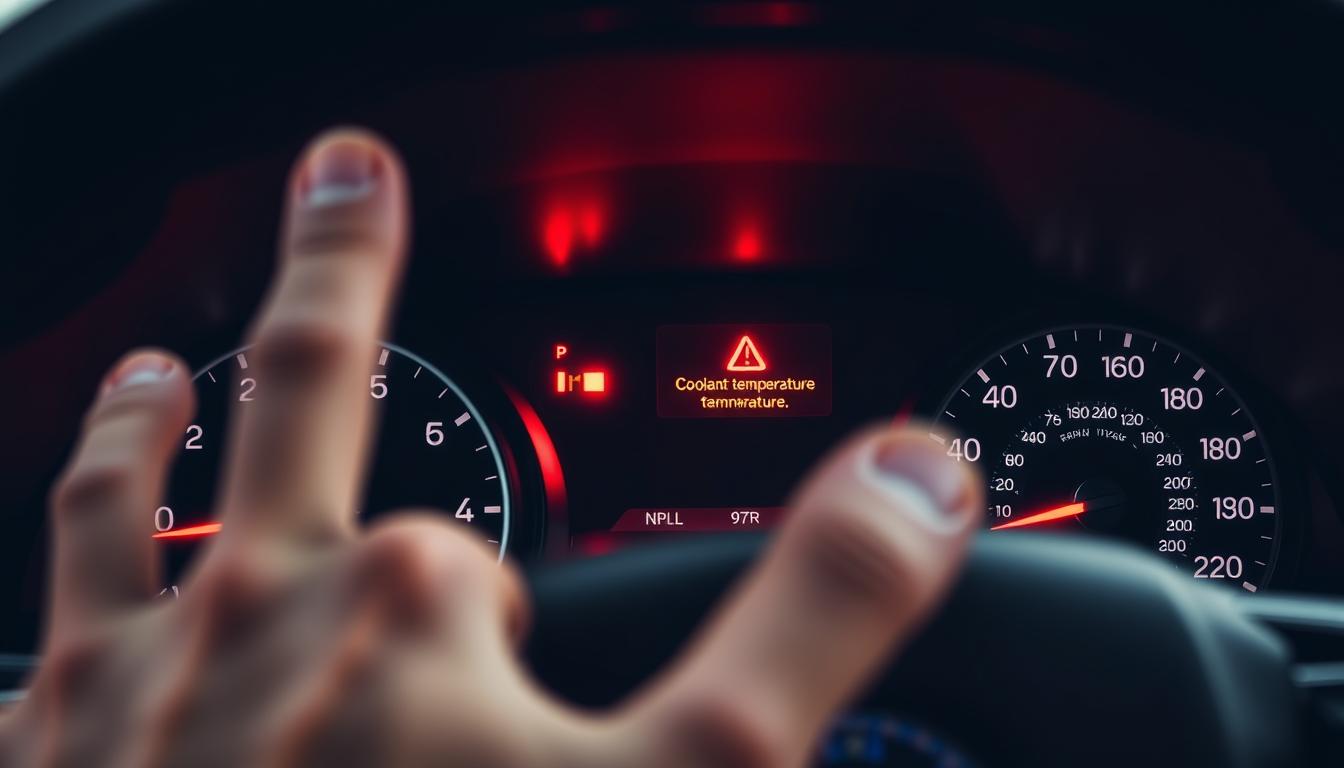
I had a problem with my car’s coolant temperature indicator. It made me think about the importance of a flashing warning light. The coolant temperature warning light is key on a car’s dashboard. It warns drivers of possible engine damage.
Knowing why and how to fix a flashing coolant temperature warning light is important. It keeps your car safe and running well. In this article, I’ll explain the main points. This will help you figure out and maybe fix the issue.
Key Takeaways
- Common causes of a flashing coolant temperature warning light
- Steps to diagnose the issue
- Potential fixes for the problem
- Importance of regular vehicle maintenance
- Consequences of ignoring the warning light
What Your Coolant Temperature Warning Light Indicates
Your car’s dashboard has many warning lights. The coolant temperature warning light is very important. It tells you if your engine’s cooling system has a problem.
How to Identify This Warning Light on Your Dashboard
The coolant temperature warning light looks like a thermometer or a special symbol. It lights up when there’s a problem. To find it, look at your dashboard and check your owner’s manual.
Normal Operation vs. Warning Signals
It’s important to know when your engine is okay and when it’s not. The coolant temperature should stay in a certain range. If it goes too high, it can hurt your engine.
- A steady or flashing light on your dashboard
- An unusual temperature reading on your dashboard display
- A noticeable decrease in engine performance
Seeing these signs early can help you fix problems before they get worse.
Coolant Temperature Warning Light Flashing Meaning
When the coolant temperature warning light starts flashing, it means your engine has a big problem. This light tells you something is wrong with your engine’s cooling system. It’s very important for keeping your engine at the right temperature.
The Difference Between Solid and Flashing Warnings
A solid light means your engine is a bit too hot. But a flashing light means it’s very hot and you need to stop right away. Knowing the difference helps you know what to do.
Immediate Risks to Your Engine
A flashing light means your engine might overheat. This can cause big problems like head gasket failure or engine seizure. The engine’s parts might get too hot and break.
When to Stop Driving Immediately
If the light is flashing, stop driving as soon as it’s safe. Driving more can make things worse. Pull over and turn off the engine to avoid more damage.
| Warning Light Status | Indication | Recommended Action |
|---|---|---|
| Solid | Elevated engine temperature | Monitor temperature, check coolant level |
| Flashing | Severe engine overheating risk | Stop driving immediately, check coolant system |
Knowing about the coolant temperature warning light is important. It helps keep your car running well. By understanding solid and flashing lights, you can fix problems before they get worse.
Consequences of Ignoring a Flashing Coolant Warning
When your coolant temperature sensor alert blinks, it’s a big warning. It means you need to act fast. Ignoring it can cause serious problems with your engine and other important parts of your car.
Potential for Engine Overheating
A flashing coolant warning means your engine might overheat. Engine overheating can damage your car a lot. It can break the head gasket or crack the engine block.
If your engine overheats, fixing it can be very expensive. You might even need a new engine.
Risk of Engine Damage and Warping
Driving with a bad cooling system can harm your engine. It can warp or damage the cylinder head, engine block, and more. Warped engine components make your car run poorly and cause more problems.
Impact on Other Vehicle Systems
A bad cooling system hurts more than just the engine. It can mess up your air conditioning system too. It can also wear out other parts of your car too soon.
Repair Cost Escalation
Not fixing a flashing coolant warning can make repairs much more expensive. What starts as a small problem can turn into a big, costly fix. Fixing it quickly can save you money.
Common Causes of a Flashing Coolant Temperature Warning
When the coolant temperature warning light starts flashing, it means there’s a problem. This problem is serious and needs to be fixed right away. A flashing light is different from a steady one. It means the issue is more serious and could damage your engine if not fixed quickly.
Low Coolant Level or Leaks
A low coolant level or leaks are common reasons for a flashing light. Coolant keeps the engine at the right temperature. If it’s low, the engine can get too hot, causing the light to flash.
Leaks can happen because of damaged hoses or a bad water pump. To find leaks, look at the hoses, radiator, and water pump for damage or moisture. Fixing a leak quickly is important to avoid more damage.
Faulty Coolant Temperature Sensor
A bad coolant temperature sensor can also make the light flash. This sensor checks the engine’s temperature and sends info to the car’s computer. If it’s not working right, it can cause the light to go on.
Testing or replacing the sensor might fix the problem. If you’re not sure what to do, a mechanic can help.
Thermostat Malfunction
The thermostat is key to the cooling system. If it’s not working, coolant can’t move around right, causing the engine to overheat. A stuck-closed thermostat is a common problem.
Fixing a bad thermostat is easy if you have the right tools. But, if you’re not sure, a mechanic can do it for you.
Water Pump Failure
Water pump failure can also cause the light to flash. The water pump moves coolant through the engine. Without it, the coolant can’t move, and the engine gets too hot.
Look for leaks, strange noises, or the light coming on if you think the water pump might be failing. A professional should check and replace it if needed.
Radiator Issues
Radiator problems, like leaks or clogs, can also make the light flash. The radiator helps cool the coolant. If it’s not working, the coolant can’t cool the engine, causing overheating.
Check the radiator for damage or leaks. Make sure it’s clean and free of blockages. Sometimes, you might need to flush or replace the radiator.
How to Safely Check Your Vehicle When the Warning Light Flashes
See a flashing coolant temperature warning light? Pull over safely and check it out. This light means your engine’s cooling system might be in trouble.
Finding a Safe Location to Pull Over
Signal and slowly move to a safe spot, away from cars. Turn off the engine when it’s safe.
Safely Opening the Hood When Engine Is Hot
Let the engine cool before opening the hood. If you must look right away, use a cloth or glove to protect your hands.
Visual Inspection Checklist
First, check the coolant level. Look for leaks and inspect the coolant’s condition. Your car’s manual will show you how.
- Check coolant level against the minimum and maximum marks on the reservoir.
- Inspect hoses and connections for signs of wear or damage.
- Look for puddles or drips under the vehicle that could indicate a leak.
What Not to Touch When Engine Is Hot
Don’t touch hot parts like the radiator cap, hoses, or engine block. They can burn you badly.
| Component | Risk | Precaution |
|---|---|---|
| Radiator Cap | Scalding from hot coolant | Let engine cool; use a cloth to open |
| Hoses | Burns from hot surfaces | Avoid touching; inspect visually |
| Engine Block | Severe burns | Avoid direct contact |
By following these steps, you can safely check your car when the coolant light flashes. This might stop more damage.
Diagnosing the Problem: Step-by-Step Guide
To fix the coolant temperature indicator blinking, follow a step-by-step guide. This guide checks your car’s cooling system parts. It helps find the problem’s source.
Checking Coolant Levels Properly
First, check the coolant level. Do this carefully for the best results.
Cold Engine Check
Check the coolant level when the engine is cold. This gives a better reading and keeps you safe from hot coolant.
Warm Engine Check
Some cars need a warm engine check. Always check your car’s manual for the right way.
Inspecting for Coolant Leaks
Coolant leaks can turn on the warning light. Look for leaks in your car.
Common Leak Locations
Leaks often show up around the radiator, hoses, and water pump. Look closely for moisture or drips in these areas.
Using UV Dye for Detection
For a detailed check, add UV dye to the coolant. Then, use a UV light to find hidden leaks.

Testing the Coolant Temperature Sensor
The coolant temperature sensor is key for engine temperature monitoring. Use a multimeter to test its resistance at different temperatures.
Examining the Thermostat Function
A bad thermostat can also cause the warning light. Remove it and test it in hot water to see if it works right.
| Diagnostic Step | Purpose | Tools Needed |
|---|---|---|
| Check Coolant Level | Ensure coolant is at the recommended level | Vehicle Manual, Coolant Reservoir |
| Inspect for Leaks | Identify any coolant leaks | UV Dye, UV Light |
| Test Coolant Temperature Sensor | Verify sensor is functioning correctly | Multimeter |
| Examine Thermostat | Check if thermostat is working properly | Thermometer, Hot Water |
DIY Fixes for Common Coolant System Issues
If your coolant light is flashing, you can try some DIY fixes. Knowing how to fix common problems can help you drive safely again.
Safely Adding Coolant to Your Vehicle
Low coolant level often causes the light to flash. To add coolant safely, pick the right type and mix it correctly.
Choosing the Right Coolant Type
Picking the right coolant is key to avoid engine damage. Check your owner’s manual for the correct type. The wrong coolant can harm your engine.
Proper Mixing Ratios
After choosing the coolant, mix it with water as the manual says. A 50/50 mix is common, but check your manual. This ensures your coolant works right.
Replacing a Coolant Temperature Sensor
A bad coolant temperature sensor can make the light flash. Replacing it is easy with the right tools.
- Find the coolant temperature sensor near the thermostat or on the engine block.
- Take off the electrical connector and remove the sensor.
- Put in a new sensor and connect the electrical connector.
Thermostat Replacement Steps
A bad thermostat can also cause the light to flash. Replacing it involves draining coolant, removing the housing, and putting in a new one.
- Drain the coolant until it’s below the housing.
- Take out the housing and the old thermostat.
- Put in a new thermostat and replace the housing.
- Fill the coolant back up and check for leaks.
Addressing Minor Leaks
Small coolant leaks can be fixed by finding and fixing the leak. Leaks often happen in the radiator, hoses, or water pump.
To fix a small leak, use a leak sealant or replace the broken part. Make sure the cooling system is empty before you start.
When to Seek Professional Help
When your coolant temperature sensor alert starts blinking, it’s important to know when to get help. Some problems you can fix yourself, but others need a pro.
Signs of Major Cooling System Failure
Look out for these signs: if your car keeps overheating, has big coolant leaks, or the cooling fan stops working. These problems can hurt your engine badly if not fixed fast.
Finding a Qualified Mechanic
To find a good mechanic, ask friends or family for tips. Or look up reviews online. Make sure they know how to fix your car.

Questions to Ask Your Mechanic
When you talk to a mechanic, ask about their experience with cooling system fixes. Also, ask how much it will cost and if they offer a warranty.
Getting a Second Opinion
If you’re not sure about the diagnosis or repairs, get a second opinion. Talk to another mechanic you trust.
| Issue | Professional Help Required | DIY Feasible |
|---|---|---|
| Coolant Leak | Yes | No |
| Faulty Coolant Temperature Sensor | Yes | Yes |
| Thermostat Malfunction | Yes | Yes |
Costs Associated with Coolant System Repairs
Knowing the costs of fixing your car’s coolant system is key. If your car’s coolant light comes on, it means you need to fix it fast.
DIY Repair Costs Breakdown
If you like to fix things yourself, you can save money. You’ll need to buy parts and tools. For example, a new coolant sensor can cost $50 to $200.
Replacing a thermostat can cost $100 to $300. This includes parts and your time if you do it yourself.
Key DIY costs to consider:
- Coolant: $10-$30 per gallon
- Thermostat: $50-$150
- Coolant Temperature Sensor: $50-$200
- Tools (if not already owned): $20-$100
Professional Repair Cost Estimates by Issue Type
Going to a mechanic can cost more. Prices change based on the problem, how long it takes, and the shop’s fame. Here are some costs for different fixes:
Professional repair estimates:
| Issue Type | Estimated Cost |
|---|---|
| Low Coolant Level or Leaks | $100-$500 |
| Faulty Coolant Temperature Sensor | $200-$600 |
| Thermostat Malfunction | $300-$700 |
| Water Pump Failure | $500-$1,200 |
These prices include parts and work. Always ask for a full quote before fixing your car.
Preventing Future Coolant Temperature Issues
Keeping your car’s cooling system in good shape can save you trouble. A few simple steps can help avoid coolant problems.
Recommended Maintenance Schedule
Stick to a regular maintenance plan. Check your coolant level and look for leaks. Make sure your cooling system works right. Your car’s manual will tell you when to do these things.
Seasonal Considerations for Your Cooling System
Seasonal changes affect your cooling system. It works harder in extreme weather. Make sure your coolant is right for the season and your radiator is clean.
Quality of Coolant and When to Replace It
Use high-quality coolant that fits your car’s needs. Coolant gets old and needs to be changed. Do it every 30,000 to 50,000 miles, as your car’s manual says.
Warning Signs to Watch For
Watch for signs like leaks, rust, or corrosion. Catching problems early can stop big issues. Regular checks are key.
Conclusion
It’s very important to know what a flashing coolant temperature warning light means. This light tells you there might be a problem with your car’s cooling system. It’s like a warning sign that needs to be checked right away.
We talked about why this light might come on. It could be because of low coolant, bad sensors, or a broken thermostat. Knowing what it means helps you fix problems early.
Keeping your car in good shape is key. Check the coolant and look for leaks often. If the light starts flashing, pull over and check it out. Sometimes, you can fix it yourself. But, knowing when to get help is also important.
By being aware and acting fast, you can keep your car’s cooling system working well. This helps avoid engine damage and keeps your car running smoothly.
FAQ
What does it mean when my coolant temperature warning light is flashing?
A flashing coolant temperature warning light means your engine might be too hot. It’s a sign that something is wrong with your cooling system. Pull over and check it out as soon as it’s safe.
Can I continue driving if my coolant temperature warning light is flashing?
No, don’t keep driving if the light is flashing. It could hurt your engine badly. This might cause it to warp or crack.
How do I check my coolant level, and what should I do if it’s low?
To check your coolant, find the reservoir with «Min» and «Max» lines. If it’s below «Min», add coolant. Use the right type for your car, as your manual says.
What are some common causes of a flashing coolant temperature warning light?
Common reasons include low coolant, leaks, a bad sensor, or a faulty thermostat. A failed water pump or radiator problems can also cause it. All these can make your engine too hot.
How can I diagnose the issue causing my coolant temperature warning light to flash?
To find the problem, check the coolant level and look for leaks. Test the sensor and thermostat. Your repair manual or a mechanic can help with these steps.
What are the potential consequences of ignoring a flashing coolant warning light?
Ignoring the light can cause your engine to overheat. This might damage parts, like the block or head. It could also cost a lot to fix. It might even harm other parts, like the transmission.
Can I fix coolant system issues on my own, or do I need professional help?
Some problems, like adding coolant or replacing a sensor, you can do yourself. But, serious issues like a failed water pump need a pro.
How can I prevent future coolant temperature issues?
To avoid problems, follow a maintenance schedule and check coolant levels often. Use good coolant and watch for warning signs. Checking your cooling system before summer helps too.