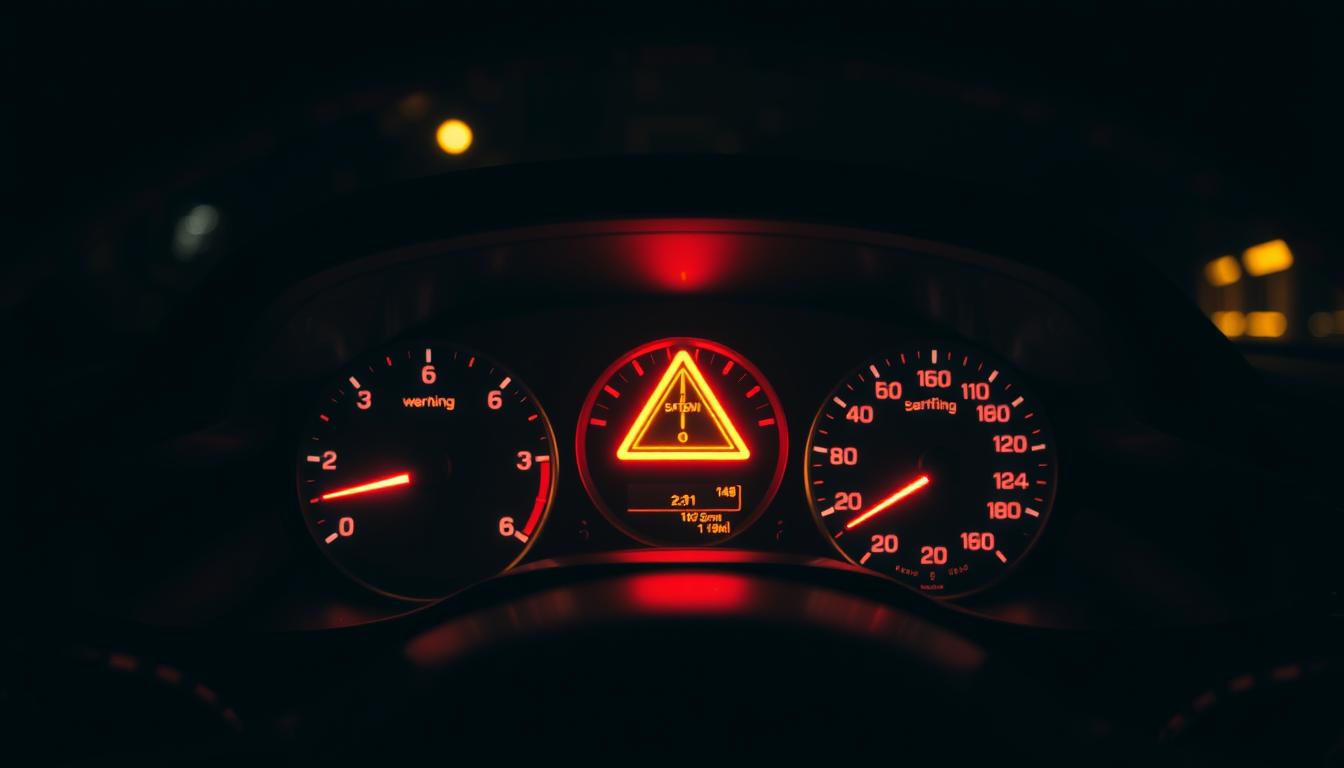
Seeing a flashing triangle with an exclamation point on your car’s dashboard is scary. This light means your car needs help. I’ll show you what it means and how to fix it.
The dashboard warning light flashing means you need to act fast. If you ignore it, your car could get worse. We’ll look at why it’s flashing and how to make it stop.
Knowing what the triangle dashboard light means helps keep your car safe and running well.
What Does the Triangle with Exclamation Point Light on Car Dashboard Mean?
The triangle with an exclamation point light on your car’s dashboard is a warning. It tells you to check your car right away. This light warns of problems that could harm your car’s performance and safety.
The Official Name and Purpose of This Warning Symbol
The triangle with an exclamation point is called the «warning indicator light» or «master warning light.» It alerts you to a problem with your car. This could be anything from tire pressure to stability control issues.
Different Variations Across Vehicle Manufacturers
Even though the symbol is standard, car makers show it differently. Some use red for serious problems, while others use yellow or orange for less urgent ones. John Smith, a renowned automotive expert, says, «The way lights are shown can confuse people. But the main idea is to warn the driver of a problem.»
«Understanding your car’s dashboard warning lights is crucial for maintaining your vehicle’s health and ensuring your safety on the road.»
Why This Warning Should Never Be Ignored
Ignoring this warning light can cause big problems. It can make your car run poorly, be less safe, and cost a lot to fix. Always check the problem right away by looking at your owner’s manual or getting help from a pro.
Knowing what the triangle with exclamation point light means helps you keep your car in good shape. It also keeps you safe while driving.
Common Causes of a Flashing Triangle Warning Light
A flashing triangle warning light can be scary. But knowing why it happens can help you fix it. This light looks like a triangle with an exclamation point. It means your car has a problem.
Low Tire Pressure Detection
Low tire pressure is a big reason for this light. Cars today have systems that check tire pressure. Checking your tire pressure often can stop this problem. If the light keeps flashing after you check the pressure, there might be a system issue.
Vehicle Stability Control System Issues
The VSC system keeps your car stable. Problems with it, like bad sensors or a broken module, can turn on the light. Driving on slippery roads or in bad weather might make the VSC turn on. But if the light stays on, you should look into it more.
Brake System Malfunctions
Brake problems can also cause the light to flash. Worn-out brake pads or issues with the EBD or ABS systems can do it. Keeping your brakes in good shape is key.
Electronic Throttle Control Problems
ETC problems can also make the light flash. The ETC system controls how much the throttle opens. Problems with the sensor or the ETC itself can cause this. Getting a professional to check your car is a good idea if you think it’s ETC.
Knowing why the light flashes can help you find the problem. Always check your car’s manual or see a mechanic if you’re not sure.
Is It Safe to Drive with a Triangle Warning Light On?
The triangle warning light can be confusing. But knowing what it means is key to your safety. This light, shaped like a triangle with an exclamation mark, shows a problem with your car.
Immediate Safety Concerns to Consider
When the triangle warning light comes on, check your car and where you are. Look for other warning lights on your dashboard. Also, see how your car is driving.
When to Pull Over Immediately
If your car acts strangely, like losing traction or making odd noises, stop right away. It’s safer to stop and check your car than to risk an accident.
Situations When You Can Continue Driving Cautiously
If your car seems fine and there are no other warning lights, you might drive carefully to a service station. But, it’s wise to get your car checked soon.
| Situation | Recommended Action |
|---|---|
| Vehicle operating normally, no other warning lights | Continue driving cautiously to a service station |
| Unusual vehicle behavior or other warning lights | Pull over immediately and check the vehicle |
First Steps to Take When You See the Triangle Warning Light
Seeing the triangle warning light on your dashboard can be scary. But, there are important steps to take right away. These steps help keep you safe and your vehicle in good shape.
Safely Pulling Over and Checking Your Vehicle
First, pull over to a safe spot as soon as you can. Turn off the engine and look for any problems. Check your tire pressure, as low pressure is a common cause.

Consulting Your Owner’s Manual
Your owner’s manual is very helpful. It tells you what the triangle warning light means for your car. Look in the section on dashboard warning lights for more info.
Pay close attention to any special instructions for your car.
Documenting When and How the Light Appeared
Write down when the triangle warning light came on. Include the date, time, and where you were driving. Note if the light was steady or flashing.
Keeping a record helps find the problem faster.
How to Check Your Tire Pressure System
Checking your tire pressure is very important. It helps your car run better and safer. It also stops the triangle warning light from coming on too soon.
Finding Your Vehicle’s Recommended Tire Pressure
To check your tire pressure, you need to know the right pressure for your car. Look for a placard on the driver’s side doorjamb or in your owner’s manual. Each car is different, so check your car’s manual for the correct pressure.
Using a Tire Pressure Gauge Correctly
After finding the right pressure, you’ll need a tire pressure gauge. Remove the valve cap and press the gauge onto the stem. Take a reading. Always check all tires, including the spare, when they’re cold.
Adjusting Tire Pressure and Monitoring Results
If your tire pressure is off, you’ll need to add or release air. After making changes, check the pressure again with your gauge. Regular checks can prevent problems that cause dashboard lights, like the triangle with an exclamation point.
By following these steps, you can keep your tire pressure right. This can help your car run better and safer, and avoid unnecessary warning lights.
Diagnosing Vehicle Stability Control Problems
Understanding the Vehicle Stability Control system is key to finding problems. This system helps keep your car stable by controlling the engine and brakes. If it breaks down, your car might not handle well, making it hard to drive in bad weather.
Recognizing Signs of VSC System Malfunction
Look out for the VSC light on your dashboard. It means something’s wrong. You might also notice your car slipping or making weird noises when you turn or brake. If this happens, get your car checked right away.

How Weather and Road Conditions Affect the VSC System
Weather and road conditions really affect the VSC system. Rain, snow, and ice make it work harder. This can cause problems if it’s not working right.
Roads with uneven surfaces or sharp turns also stress the system. It might turn on more often.
Common VSC Sensors That Fail and Their Symptoms
The VSC system uses many sensors to work. These include wheel speed, steering angle, and yaw rate sensors. If these sensors fail, you might see the VSC light flickering or hear strange noises from the brakes.
Regular car checks can catch problems early. This helps avoid big issues later on.
Resetting the Triangle with Exclamation Point Light
When the triangle with exclamation point light shows up, resetting it is easy. Just follow the right steps.
This light warns of many issues. It could be low tire pressure, problems with the vehicle’s stability, or brake issues.
Manual Reset Procedures for Popular Car Makes
Each car brand has its own way to reset this light. For example:
| Car Make | Reset Procedure |
|---|---|
| Toyota | Press and hold the trip button until the display resets. |
| Ford | Use the dashboard menu system to navigate to the «Settings» menu and select «Reset Warning Lights.» |
| Honda | Press and hold the «Info» button until the display shows «Resetting Warning Lights.» |
Using the Dashboard Menu System for Resets
Many cars today have advanced menu systems. These let you reset warning lights. Just go to «Settings» or «Vehicle Information» and find «Reset Warning Lights.»
When a Reset Doesn’t Work and What to Do Next
If resetting the light doesn’t fix it, there’s a bigger problem. You should see a mechanic for help.
Temporary vs. Permanent Reset Solutions
Resetting the light might just be a quick fix. If the real problem isn’t solved, the light will come back. You need to find and fix the real issue.
Always check your owner’s manual or talk to a mechanic if you’re not sure how to reset the light.
Using an OBD-II Scanner for Accurate Diagnosis
When your car’s dashboard lights up with a triangle warning, an OBD-II scanner is very helpful. The triangle with exclamation point light means something is wrong. But it doesn’t say what the problem is.
To find out what’s wrong, you need an OBD-II scanner. It talks to your car’s computer to get trouble codes (DTCs).
Choosing the Right Scanner for Your Vehicle
Not all OBD-II scanners are the same. When picking one, think about a few things:
- Make sure it works with your car’s make and model.
- Look for scanners with cool features like live data and code lookup.
- Scanners cost different amounts, from cheap to very expensive.
Step-by-Step Guide to Connect and Use an OBD-II Scanner
Using an OBD-II scanner is easy:
- Find your car’s OBD-II port, usually under the steering column.
- Plug the scanner into the port.
- Turn on the ignition.
- Follow the scanner’s steps to get DTCs.
Interpreting Common Error Codes Related to Triangle Warnings
After getting the DTCs, you need to understand them. Common codes for the triangle light include problems with stability control, brakes, and the electronic throttle.
| Code | Description |
|---|---|
| C1234 | Vehicle Stability Control System Issue |
| C5678 | Brake System Malfunction |
Free Options for Code Reading at Auto Parts Stores
If you don’t have an OBD-II scanner, many auto parts stores can help. They can use their scanner to find out what’s wrong with your car.
When to Seek Professional Help
Knowing when to take your vehicle to a mechanic is important. Some car symbols are easy to fix. But, the triangle warning light often means a bigger problem.
Signs That DIY Fixes Won’t Resolve the Issue
If you’ve checked your tire pressure and looked in your owner’s manual, but still have the problem, it’s time to get help. Persistent or recurring warning lights show it’s not a simple fix.
Finding a Qualified Mechanic for Your Specific Problem
To find a good mechanic, look for ASE (Automotive Service Excellence) certifications. Also, check online reviews. Ask friends or family for recommendations to find someone you can trust.
Expected Costs and Timeframes for Professional Repairs
| Service | Estimated Cost | Typical Timeframe |
|---|---|---|
| Diagnostic Check | $100-$200 | 1-2 hours |
| Tire Pressure System Repair | $50-$150 | 1-3 hours |
| VSC System Repair | $200-$500 | 2-5 hours |
Repair costs and times can change a lot. A mechanic can give a better idea after checking your car.
Preventing Future Triangle Warning Light Issues
Keeping your car in good shape can help avoid the triangle warning light. Regular checks make sure everything works right.
Regular Maintenance Schedules That Prevent Warning Lights
Sticking to a maintenance schedule is key. This means oil changes, tire rotations, and new brake pads. Regular care keeps your car running long and safe. Always follow what your car’s manual says.
Seasonal Vehicle Checks That Keep Systems Healthy
Seasonal checks find problems early. For example, checking tire pressure before trips or in changing seasons stops warning lights. Also, check your battery and fluids with the seasons.
Driving Habits That Reduce System Stress and Failures
How you drive affects your car’s health. Avoid sudden starts and hard stops. Drive calmly and avoid extreme weather. Good driving habits make your car last longer and run better.
Conclusion
Seeing a triangle with an exclamation point light on your car’s dashboard can be scary. But knowing what it means and how to fix it can help. This light warns of problems like low tire pressure or issues with the car’s stability control.
We talked about why this light comes on, like low tire pressure or brake problems. We also covered what to do when you see it, like pulling over safely and using a scanner for help.
To avoid this light, keep your car in good shape. Check tire pressure often and follow your car’s maintenance schedule. Also, be careful with how you drive to avoid stressing your car’s systems.
By knowing why the light comes on and taking action, you can keep yourself safe. This way, you can handle the exclamation mark light on your car’s dashboard and stay safe on the road.
FAQ
What does the triangle with an exclamation point light on my car’s dashboard mean?
This light warns of several issues. It might mean low tire pressure, problems with the Vehicle Stability Control, or brake issues. It depends on your car’s maker.
Is it safe to drive with the triangle warning light on?
It’s not always safe. If you feel your car slipping or can’t stop, stop right away. If not, you can drive carefully but check it soon.
How do I check my tire pressure system?
First, find your car’s tire pressure number. Use a gauge to check the pressure. Adjust it if needed. Look in your manual or on the driver’s door for this number.
Can I reset the triangle with an exclamation point light myself?
Yes, you can try to reset it. Use manual steps or your car’s menu. But, if it doesn’t work, see a mechanic.
What is an OBD-II scanner, and how can it help diagnose the triangle warning light?
An OBD-II scanner connects to your car’s computer. It shows error codes for the warning light. It helps find and fix the problem.
How can I prevent future triangle warning light issues?
Regular checks and maintenance help. Check tire pressure and brake pads often. Also, drive carefully to avoid system stress.
What should I do if the triangle warning light comes on while I’m driving?
Pull over safely if the light comes on. Check your car and read your manual. If needed, get help from a mechanic.
Are there any free resources available to help me understand the triangle warning light?
Yes, some auto stores offer free code checks. They use an OBD-II scanner to find out why the light is on.