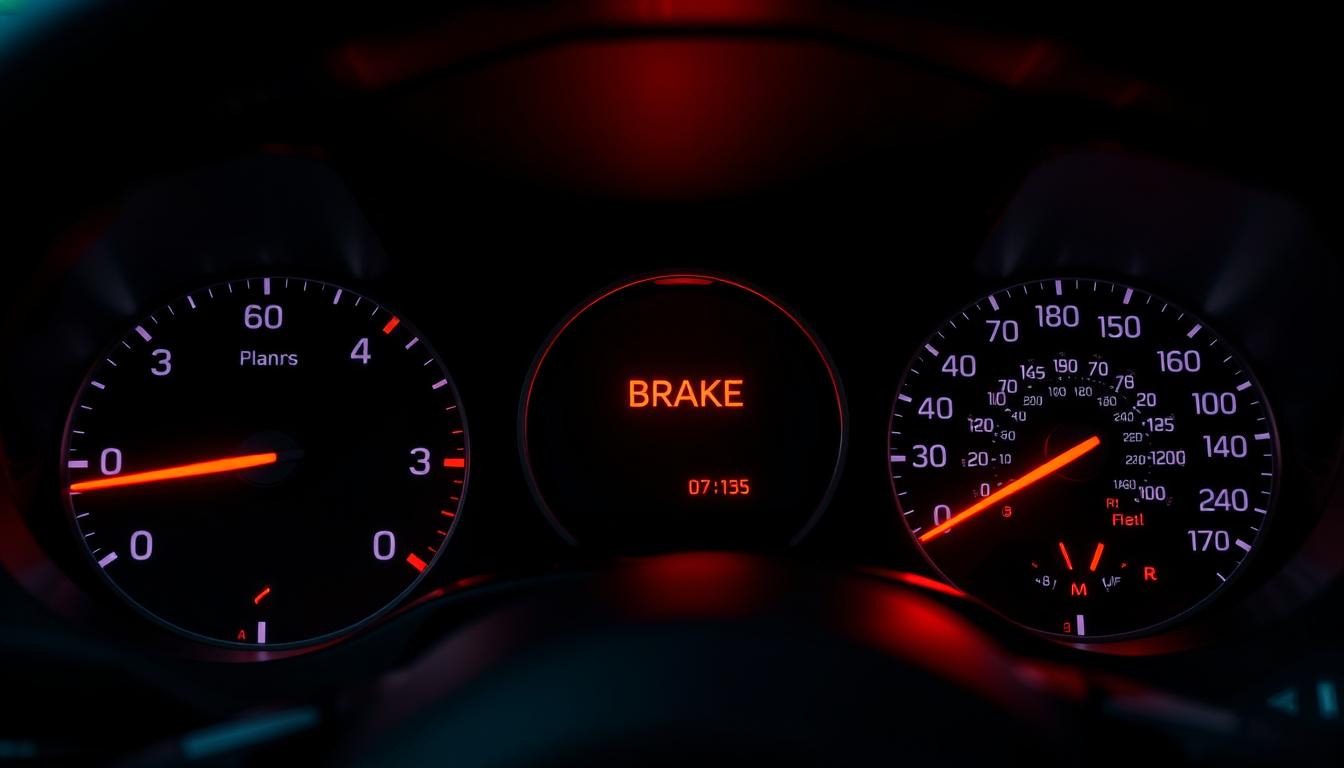
Seeing the brake light on your dashboard can worry you, even more so if it stays on while driving. I’m here to help you understand what it means and what to do next.
The brake system warning light means there might be a problem with your car’s brakes. It could be something simple like worn-out brake pads. Or it could be a more serious issue that needs quick help.
In this article, I’ll show you how to find and fix the problem. Or when you should get help from a professional.
Understanding Your Vehicle’s Brake Warning System
Your car’s brake warning system is very important. It tells you when your brakes might have a problem. This helps keep you safe while driving.
Different Types of Brake Warning Lights
There are many kinds of brake warning lights. A red light means something serious is wrong with your brakes. An amber or yellow light might mean a problem with the Anti-lock Braking System (ABS) or electronic brakeforce distribution (EBD).
What Each Warning Light Indicates
A red light usually means a big problem, like low brake fluid or worn-out brake pads. An ABS light means there’s a problem with the Anti-lock Braking System. This could make it hard to stop on slippery roads.
Knowing what your brake light means is key. It helps you fix problems early. This can save you money and keep your car safe.
What It Means When Your Brake System Warning Light Stays On While Driving
If your brake light stays on while driving, it’s very important. This light means there’s a problem with your brakes. You need to fix it right away.
Immediate Safety Concerns
The brake light on means your brakes might not work right. This could make stopping harder. It might even cause your brakes to fail.
Risk Assessment: When to Pull Over Immediately
Stop right away if you see these signs:
- Soft or spongy brake pedal
- Unusual noises when applying the brakes
- Pulsating or vibrating brake pedal
These signs mean you need help fast. If you’re not sure, it’s safer to get help right away.
Common Causes of Brake Warning Light Activation
Knowing why your brake light is on is the first step to fix it. The brake light can turn on for many reasons. Finding the main cause is key to solving the problem.
Low Brake Fluid Levels
Low brake fluid is a common reason for the light to come on. Brake fluid helps your brakes work right. If it’s too low, the light will turn on. Just check and add more brake fluid to fix it.
Worn Brake Pads
Worn-out brake pads can also cause the light to turn on. When brake pads wear down, they set off the warning light. You can fix this by checking and replacing the pads.
ABS System Malfunctions
The Anti-lock Braking System (ABS) is very important for safety. If the ABS goes wrong, the brake light will turn on. Finding and fixing ABS problems might need a mechanic.
Parking Brake Issues
Using the parking brake while driving can turn on the light. Make sure to turn off the parking brake before driving. A stuck parking brake can also cause the light to come on, needing fixing.
Sensor or Electrical Problems
Bad sensors or electrical problems can also cause the light to turn on. This might be because of a faulty sensor or other electrical issues. Checking the electrical system and sensors is needed to find and fix these problems.
Experts say, «Regular car maintenance stops brake problems.» Knowing why the brake light turns on helps car owners fix issues early. This keeps everyone safe on the road.
How to Perform a Quick Brake System Check
To fix the brake system warning light, start with a simple check. This check can find problems early, before you need a pro.
Checking Brake Fluid Levels
First, check your brake fluid level. Low fluid can turn on the warning light. Find the brake fluid reservoir under the hood. Make sure the level is between the marks.
Inspecting Brake Pads and Rotors
Then, look at your brake pads and rotors. If they’re worn out, the light will turn on. Check for any damage or wear.
| Brake Component | Condition | Action |
|---|---|---|
| Brake Pads | Worn down to minimum thickness | Replace |
| Rotors | Excessively worn or scored | Resurface or Replace |
Testing the Parking Brake
Make sure your parking brake is off. If it’s not, the light will turn on. Press and release it a few times to test.
Examining Brake Lines for Leaks
Look for leaks or damage in your brake lines. Leaks can lower the fluid level and turn on the light. Check for wet spots or rust.
Step-by-Step Troubleshooting Guide
To fix the brake system warning light, we’ll go through a detailed guide. This guide will help find the problem and show you how to fix it.
Initial Assessment
The first thing to do is check the dashboard. Look for other warning lights and notice any brake changes.
Checking Dashboard for Additional Warning Lights
When the brake light is on, check the dashboard for other lights. This can tell us about other problems or causes.
Noting Any Changes in Brake Performance
Watch how your brakes work. Look for spongy brakes, grinding sounds, or vibrations when you press the brakes.
Basic Troubleshooting Steps
After checking the dashboard, do some basic steps. These include restarting the car, checking the parking brake, and looking at the master cylinder.
Restarting the Vehicle
Restarting the car might fix the problem if it’s a temporary issue. Turn off the engine, wait a bit, and then start it again.
Checking and Releasing the Parking Brake
Make sure the parking brake is off. A brake light can come on if it’s not fully released.
Inspecting the Master Cylinder
The master cylinder is key to the brakes. Check it for leaks or damage.
| Troubleshooting Step | Action | Potential Outcome |
|---|---|---|
| Restart Vehicle | Turn off engine, wait, and restart | Resolves temporary glitch |
| Check Parking Brake | Ensure parking brake is fully released | Eliminates false trigger |
| Inspect Master Cylinder | Look for signs of leaks or damage | Identifies potential cause |
When to Safely Continue Driving vs. When to Stop
When your brake warning light comes on, you must decide fast. It’s important to think quickly and choose wisely. This keeps you and others safe on the road.
Signs That Indicate Immediate Danger
Look out for these signs to stop right away:
- Pulsating or spongy brake pedal
- Unusual noises when applying the brakes
- Visible signs of brake fluid leakage
- The brake warning light is red or flashing
These signs mean your brakes might be in trouble. You need to stop and get help fast.
Conditions When Limited Driving May Be Acceptable
If the light is yellow or amber and you see no danger, you might drive carefully. But remember to:
- Slow down and brake gently
- Stay away from busy roads and dangers
- Get your brakes checked soon
Safe Driving Techniques When Brake Warning Light Is On
If you must keep driving, follow these tips:
Keep a safe distance from cars ahead. Don’t stop suddenly. And be ready for your brakes to fail.

Knowing when to stop and how to drive safely can help. This way, you can stay safe with a brake warning light on.
DIY Solutions for Common Brake Warning Light Issues
If you see a brake system warning light, don’t worry. You can do a few simple things to fix it. This light can mean many things, like low brake fluid or worn-out brake pads.
Topping Off Brake Fluid Safely
Low brake fluid is a common reason for this light. Find the brake fluid reservoir under your car’s hood. Check if the level is at or near the top. If it’s low, add the right brake fluid. Always check your car’s manual for the right type.
Releasing a Stuck Parking Brake
A stuck parking brake can also turn on the light. Make sure your car is in neutral or park. Then, try to release the parking brake. If it’s stuck, move it gently back and forth while pressing the button.
Resetting the Warning Light System
After fixing the problem, you might need to reset the light. Turn off the engine, wait a bit, and then start it again. If the light doesn’t go off, it might be a bigger problem.
When DIY Isn’t Recommended
Some brake light issues you can fix yourself, but others need a pro. If you’re not sure or the light stays on, get a mechanic. Your safety is very important, and ignoring brake problems can be dangerous.
- If the brake warning light is with other signs like grinding noises or soft brake pedals.
- If you see a brake system leak.
- If you’re not sure about doing the checks yourself.
Trying these DIY fixes might solve the problem or help a mechanic find it. This way, they can fix it right.
Professional Diagnosis: What to Expect at the Mechanic
Knowing what happens at a mechanic can make you feel better. When you go, you’re taking a big step to fix the problem.
Diagnostic Tests Mechanics Will Perform
A good diagnosis includes many tests. These might be:
- Checking brake fluid levels
- Inspecting brake pads and rotors for wear
- Testing the ABS system
- Examining brake lines for leaks or damage
These tests help find the main problem with the brake light.
Questions to Ask Your Mechanic
It’s good to ask your mechanic a few things. This way, you’ll know what’s going on. Ask them:
- What is the specific cause of the brake warning light?
- What repairs are necessary?
- Can you explain the recommended repair options?
- What is the estimated cost and timeframe for repairs?
Typical Repair Costs for Brake System Issues
Knowing about the tests and repairs helps you understand the process. This way, you can feel more in control when fixing your brake system warning light.
Preventing Future Brake Warning Light Issues
To avoid brake warning lights, take care of your car. Know why brake systems fail. Then, you can stop problems before they start.
Regular Maintenance Schedule
Keep up with car care. Check brake fluid levels and look at brake pads and rotors. This helps find issues early.
Warning Signs to Watch For
Watch for signs of brake trouble. Listen for squealing or grinding noises. Also, check for a spongy brake pedal or vibrations when braking.
Best Practices for Brake System Health
Keep your brakes in top shape. Don’t brake hard. Also, get your brakes checked by a pro at the right time.

Understanding the Relationship Between Brake Lights and ABS Systems
The Anti-lock Braking System (ABS) is key to car safety. It works with the brake light system. ABS stops wheels from locking up during hard braking. This keeps the car from skidding.
How ABS Affects Your Brake Warning System
The ABS system is connected to the brake warning light. If ABS has a problem, the light on your dashboard will turn on. This is because ABS is part of the car’s braking system.
Common ABS-Related Warning Light Triggers
Many things can make the brake warning light turn on. These include bad wheel speed sensors, ABS module problems, or issues with the ABS pump. Finding these problems needs special tools.
Differences Between ABS and Standard Brake Warning Lights
It’s important to know the difference between ABS and standard brake lights. Both deal with the brakes, but they mean different things. ABS lights show a problem with the anti-lock system. Standard brake lights might mean low brake fluid or worn-out brake pads.
Knowing these differences helps you fix brake light problems. If your brake light is on while driving, finding the right problem is key. This keeps you safe on the road.
Emergency Situations: When Your Brake System Warning Light Flashes
A flashing brake system warning light means you need to act fast. It’s a sign of a serious problem. Stay calm and follow the right steps to keep everyone safe.
Immediate Actions to Take
If the brake light flashes, pull over to the side of the road. Turn off the engine and use the parking brake.
Then, check the brake fluid level. If it’s low, you might need to add more. But be careful, a sudden drop could mean a big problem.
Emergency Braking Techniques
Knowing how to brake in an emergency is key. If your car has ABS, press the brake pedal hard and keep it pressed. Without ABS, pump the brake pedal to avoid skidding.
Calling for Roadside Assistance
If you can’t fix the problem yourself, call for roadside help. Many auto insurance companies and car clubs offer this service.
Documenting the Issue for Insurance Purposes
Take pictures of your dashboard with the warning light on. Also, write down what happened before the problem. This info is useful when you file an insurance claim.
| Action | Description |
|---|---|
| Pull Over | Safely pull over to the side of the road |
| Check Brake Fluid | Inspect the brake fluid level and condition |
| Call Assistance | Contact roadside assistance or a tow truck |
| Document | Take photos and notes for insurance purposes |
Conclusion: Staying Safe When Brake Warning Lights Appear
Being safe on the road means watching for warning signs. The brake system warning light is very important. If it lights up, you need to know what it means and what to do.
We talked about why this light might come on. It could be because of low brake fluid or a problem with the ABS system. Knowing these reasons helps you fix the issue.
It’s very important to keep an eye on brake warning lights. If you’re not sure what to do, get help from a professional. Regular car checks and knowing when something is wrong can help avoid big problems.
Being informed and taking action helps keep your brakes working right. This keeps you safe while driving.
FAQ
What does it mean when my brake system warning light stays on while driving?
A steady brake light means your brakes might have a problem. Check the brake fluid and pads. Look for leaks or damage too.
How do I troubleshoot my brake warning light?
First, check your dashboard for other lights. Note any brake changes. Try restarting your car and checking the parking brake.Also, look at the master cylinder.
Can I continue driving with the brake system warning light on?
It depends. If the light is steady, drive carefully to a shop. But, if it flashes or you hear odd noises, stop right away.
What are some common causes of brake warning light activation?
Low brake fluid, worn pads, and ABS problems are common. Also, parking brake issues and sensor problems can cause it. Check these and fix them if needed.
How can I prevent future brake warning light issues?
Regular maintenance helps. Watch for signs and keep your brakes healthy. Avoid extreme temperatures and driving conditions.
What should I expect when taking my vehicle to a mechanic for a brake system warning light issue?
The mechanic will do tests and check your brakes. They might ask about your car’s history. Be ready to ask questions and talk about costs.
Can I reset the brake warning light system myself?
Sometimes, you can reset it with a code scanner. But, if the problem isn’t fixed, the light will come back. It’s best to ask a mechanic for help.
What are some safe driving techniques when the brake warning light is on?
Increase your following distance and avoid hard braking. Be ready for stops. Stay alert and adjust your driving.