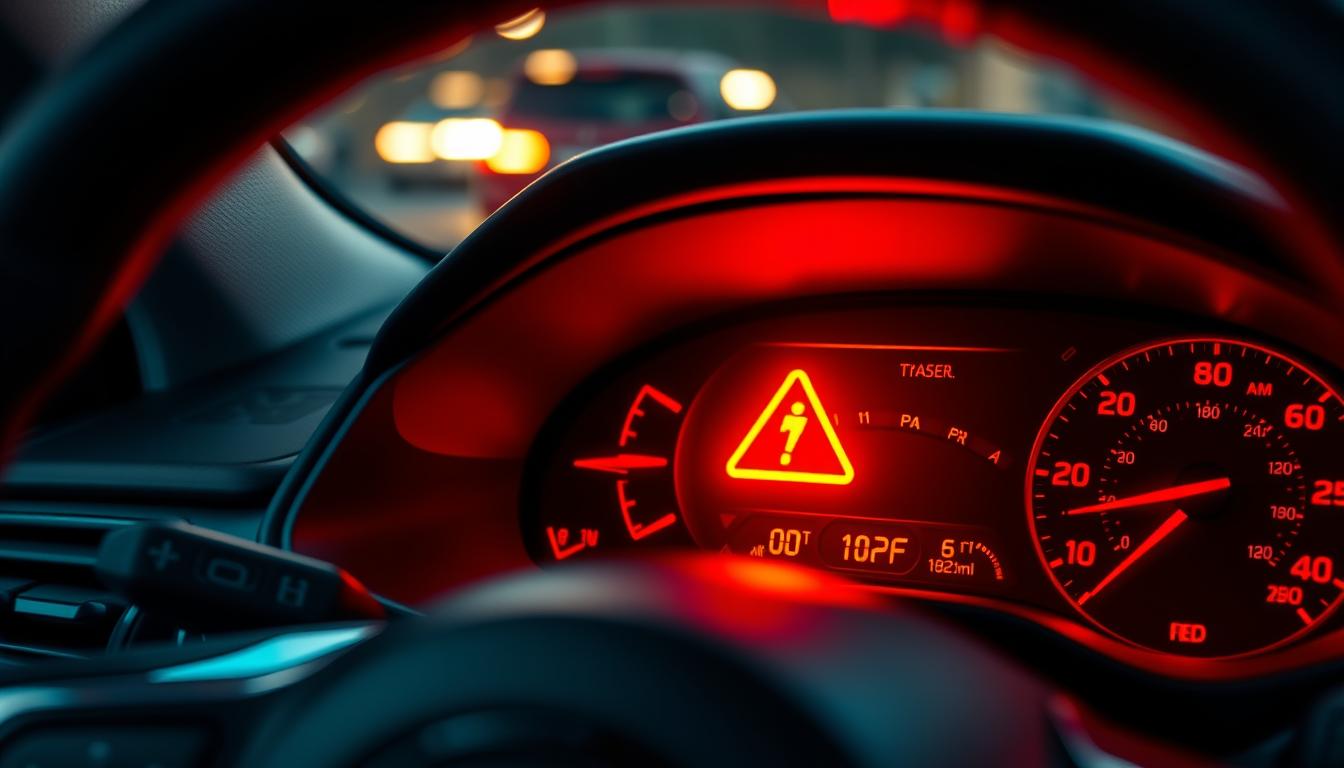
If you’re driving a vehicle with a diesel particulate filter (DPF) and see the DPF warning light flashing, you need to know what it means. You also need to know how to fix it.
A blinking DPF light means you have a problem that needs fixing right away. If you ignore it, your engine could get damaged. This could cost you a lot of money.
In this article, I’ll show you how to find and possibly fix the problem. This will help you drive safely and without trouble.
Understanding the Diesel Particulate Filter (DPF) System
The Diesel Particulate Filter (DPF) system is key in modern diesel cars. It helps cut down bad emissions. Knowing how it works and why it’s important is crucial for car owners.
What is a DPF and How Does it Work?
A DPF catches and removes soot from diesel engine exhaust. It’s made of materials like cordierite or silicon carbide. These materials let gases through but trap soot.
When soot builds up, it gets burned off. This process is called regeneration. It can happen on its own or with help from the car’s system.
The Importance of DPF in Emission Control
The DPF system is vital for cutting down diesel engine emissions. It traps soot, which is bad for people and the planet. By doing this, DPFs make the air cleaner and help meet environmental rules.
Types of DPF Systems in Modern Diesel Vehicles
There are many kinds of DPF systems in today’s diesel cars. Here are a few:
| Type | Description | Regeneration Method |
|---|---|---|
| Passive DPF | Uses exhaust heat to clean the filter. | Continuous or periodic passive regeneration. |
| Active DPF | Uses extra heat, like from fuel injectors, to clean the filter. | Periodic active regeneration. |
| Catalyzed DPF | Uses a catalyst to lower the temperature needed for cleaning. | Both passive and active regeneration methods. |
Knowing about these DPF systems helps fix problems in diesel cars.
Diesel Particulate Filter DPF Light Blinking: What It Means
A blinking DPF light on your diesel vehicle’s dashboard means you need to act fast. It shows a problem with your Diesel Particulate Filter system.
Decoding Warning Light Patterns
The DPF warning light’s pattern tells you a lot about the problem. Different patterns show different levels of soot or other DPF system issues. Knowing these patterns helps you find the problem.
Severity Levels Explained
DPF warning lights show how serious the problem is. Some issues are easy to fix, while others need quick help from a pro. Knowing the severity helps you decide what to do next.
Differences Between Solid and Blinking Indicators
It’s important to know the difference between a solid and blinking DPF light. A solid light means a less urgent problem, like needing a regeneration cycle. But, a blinking light means a big problem that needs quick action to avoid engine or DPF damage.
Understanding a blinking DPF light helps you fix the problem fast. You might need to do a regeneration cycle, check sensors, or get professional help. Being informed is the first step to solving the issue.
Common Causes of DPF Light Blinking
A blinking DPF light means your car’s Diesel Particulate Filter system has a problem. Knowing why it blinks is key to fixing it.
Excessive Soot Accumulation
Too much soot in the filter is a big reason for the blinking light. This happens when you drive a lot in the city. Or if your driving doesn’t let the filter clean itself enough.
Failed or Interrupted Regeneration Cycles
Regeneration cycles help burn off soot from the DPF. If these cycles don’t work right, the light will blink.
Sensor Malfunctions and Electrical Issues
At times, the problem isn’t with the DPF. It’s with the sensors that check its health or electrical problems with the system.
Fuel Quality Problems
Bad fuel can make more soot, causing the light to blink. Make sure you use the right fuel for your diesel car.
| Cause | Description | Potential Solution |
|---|---|---|
| Excessive Soot | Soot buildup due to driving patterns | Change driving habits, perform regeneration cycle |
| Regeneration Issues | Interrupted or failed regeneration | Check and repair regeneration system |
| Sensor Malfunctions | Faulty sensors monitoring DPF | Inspect and replace faulty sensors |
| Fuel Quality | Low-quality fuel causing soot | Switch to high-quality diesel fuel |
Initial Steps When Your DPF Warning Light Appears
If your DPF warning light is flashing, it’s important to know what to do. This helps keep your car running well and avoids expensive fixes. The steps you take first can really help fix the problem and stop more damage.
Immediate Actions to Take
When you see the DPF warning light, reduce your vehicle’s load and avoid heavy acceleration. This eases the engine and DPF system’s work. Also, check your dashboard for other warning lights that might show more issues.
Checking Your Vehicle’s Manual
Look at your car’s owner’s manual for DPF warning light advice. It might tell you what to do next, like if it’s okay to keep driving or stop right away. It’s really important to follow your car’s specific advice.
Safe Driving Practices Until Resolved
Drive safely until the DPF problem is fixed. Try to avoid heavy traffic and fast speeds to not make things worse. If the light keeps flashing, get your car checked by a pro as soon as you can.

How to Diagnose DPF Issues Without Special Tools
Figuring out DPF problems doesn’t need fancy tools. It’s about knowing what to look for. You can spot diesel particulate filter issues by checking visually, watching for exhaust signs, and noticing changes in your car’s performance.
Visual Inspection Techniques
First, look at your car’s DPF system. Search for cracks or dents on the DPF and its pipes. Also, check for leaks or loose connections in the exhaust. These can turn on the DPF warning light.
Monitoring Exhaust Symptoms
Watch for odd exhaust signs. A clogged DPF might cause:
- Too much black or gray smoke
- Strange noises from the exhaust
- A strong diesel or soot smell
Performance Changes to Watch For
Notice any changes in how your car runs. A clogged DPF can lead to:
Less Power and Slower Acceleration
A clogged DPF blocks exhaust flow. This means less engine power and slower speed.
More Fuel Used
A bad DPF makes your engine use more fuel. It works harder because of the blockage.
By following these steps, you can find DPF problems without special tools. But, if you’re not sure or don’t know what to do, get help from a mechanic.
Using Basic Diagnostic Tools for DPF Problems
Fixing DPF problems doesn’t need fancy tools. Simple tools can work well. A blinking DPF light can be solved with these tools.
Consumer-Grade OBD2 Scanners
A consumer-grade OBD2 scanner is cheap and helpful. It reads trouble codes for the DPF system. It gives clues about the problem.

Reading and Interpreting DPF-Related Codes
After getting trouble codes, you need to understand them. DPF codes often mean soot buildup or regeneration failures. Knowing these codes helps fix the DPF light problem.
Monitoring Backpressure Values
Some OBD2 scanners let you check backpressure. High backpressure means a clogged or bad DPF. This helps see if your DPF is okay or needs help.
Using these simple tools helps fix DPF light problems. It can also save you from expensive repairs later.
DIY Solutions for DPF Light Issues
If your DPF light is blinking, don’t worry. You can try some DIY fixes. The Diesel Particulate Filter (DPF) helps reduce emissions. But, if it breaks, fixing it can be expensive. Try these DIY fixes before calling a pro.
Forcing a Passive Regeneration Cycle
One easy fix is to force a passive regeneration cycle. This means driving fast to burn off soot in the DPF. Drive on the highway at 60-70 mph for 20 minutes. This might start a regeneration cycle and clear the DPF.
Highway Driving Method Step-by-Step
To do the highway driving method, follow these steps:
- Make sure your fuel tank is half full.
- Drive on the highway at 60-70 mph.
- Keep this speed for 20 minutes to let the DPF regenerate.
- Watch your dashboard for any DPF light changes.
Using DPF Cleaning Additives
Another fix is using DPF cleaning additives. These products help clean the DPF by breaking down soot. Always follow the maker’s instructions and pick a product that fits your vehicle.
Manual Regeneration (If Supported by Vehicle)
Some diesel cars can do manual regeneration. Check your car’s manual to see if it can. If it can, follow the maker’s guide to start a manual regeneration cycle. This might be a better way to clear the DPF and fix the light.
| DIY Solution | Description | Effectiveness |
|---|---|---|
| Forcing a Passive Regeneration Cycle | Driving at high speeds to burn off soot | High |
| Using DPF Cleaning Additives | Adding chemicals to break down soot | Moderate |
| Manual Regeneration | Initiating a regeneration cycle manually | High |
Trying these DIY fixes might solve your DPF light problem and save you money. But, if it doesn’t work, get help from a diesel expert.
When to Seek Professional Help for DPF Problems
It’s important to know when to get help for DPF problems. Some issues can be fixed by yourself. But, others need a professional mechanic.
Warning Signs of Serious DPF Damage
Look out for these signs: a DPF light that keeps blinking, engine power loss, unusual smoke, or less fuel efficiency. These could mean serious damage that needs quick help.
Finding a Qualified Diesel Specialist
Find a diesel specialist for DPF problems. Look for mechanics who know about diesel engines and your car. Check online reviews and ask for referrals. Make sure they have ASE certifications.
Questions to Ask Your Mechanic
Ask the right questions when you find a mechanic. Ask about their DPF repair experience, how they diagnose problems, costs, and warranties. This helps you choose the right mechanic.
| Question | Why It Matters |
|---|---|
| What experience do you have with DPF repairs? | Ensures the mechanic is familiar with DPF systems. |
| Can you explain the diagnosis process? | Helps you understand how the mechanic will identify the problem. |
| What are the potential costs involved? | Gives you a clear understanding of the financial commitment. |
| Do you offer any warranty on your work? | Provides assurance of the quality of the repair. |
Knowing when to get professional help and choosing the right mechanic is key. This ensures your DPF problems are fixed well and fast.
Professional DPF Repair and Replacement Options
For DPF light problems, getting help from a pro is a good idea. If DIY fixes don’t work, a mechanic or diesel expert is needed.
Professional Cleaning Services
DPF cleaning is a common service. It removes soot and ash from the filter. This makes the engine run better and saves fuel.
Replacement Costs and Considerations
Replacing the DPF is needed if cleaning fails. The price of a new DPF varies by vehicle. Remember, the cost includes both the part and labor.
Aftermarket vs. OEM Parts
Choosing between aftermarket and OEM parts is a big decision. OEM parts are more expensive but ensure the best fit and performance. Knowing this helps keep your car in good shape.
Warranty Implications
Warranty is another important thing to think about. Using OEM parts keeps your warranty valid. But aftermarket parts might not. Always check the warranty before deciding.
In short, professional DPF services are a solid solution for DPF light problems. Knowing the options, costs, and warranty details helps make the right choice for your vehicle.
Preventing Future DPF Light Issues
To avoid DPF light problems, drive right, keep up with maintenance, and use good fuel. These steps help keep your Diesel Particulate Filter working well.
Proper Driving Habits for DPF Health
How you drive affects your DPF system. Driving on highways often helps clear soot. Try to avoid short trips, as they can cause problems.
- Drive at highway speeds regularly to help maintain DPF health
- Avoid short trips that can lead to incomplete regeneration
- Use the correct driving mode for your vehicle (e.g., eco-mode or sport mode) as recommended by the manufacturer
Maintenance Schedule Recommendations
Stick to your car’s maintenance schedule for a healthy DPF. This includes oil changes, fuel filter swaps, and DPF checks. Check your owner’s manual for when to do these.
Fuel Quality Considerations
Good diesel fuel is key for your DPF. Bad fuel can make soot and harm your DPF. Choose fuel that meets your car’s standards.
Oil Change Specifications
Changing oil on time with the right oil is important. Wrong oil can clog your DPF. Always check your owner’s manual for the right oil.
Key Takeaways:
- Proper driving habits and regular maintenance are crucial for DPF health
- High-quality fuel and correct oil specifications are essential for preventing DPF issues
Conclusion
It’s important to know about diesel particulate filter dpf light blinking. This helps keep your car in good shape and meets emission rules. We talked about why it happens, how to find out, and how to fix it.
Spotting DPF problems early, like too much soot or failed regenerations, is key. You can try fixing it yourself or get help from a pro. Either way, acting fast is crucial.
Keeping your car in good condition helps avoid dpf light issues. Drive right, use good fuel, and get regular checks. Following these tips will help you deal with DPF problems and keep your diesel car running well.
FAQ
What does it mean when my diesel particulate filter (DPF) light is blinking?
A blinking DPF light means there’s a problem. It could be too much soot or a failed cycle. You should fix it fast to avoid damage.
Can I continue driving my vehicle with a blinking DPF light?
Driving with a blinking DPF light is not a good idea. It can cause engine problems and higher emissions. Ignoring it can lead to expensive repairs.
How do I reset my DPF light?
To reset the DPF light, you need to solve the problem first. Sometimes, a scan tool can help. But, if the problem stays, the light will come back.
What are the common causes of DPF light issues?
DPF light issues can come from many things. Too much soot, failed cycles, or sensor problems are common. Knowing these can help you find and fix the issue.
Can I perform a DPF regeneration cycle myself?
Yes, you can try a regeneration cycle by driving fast. But, if it doesn’t work or your car doesn’t support it, see a mechanic.
How often should I clean or replace my DPF?
How often to clean or replace your DPF depends on your car and how you drive. It’s usually between 50,000 to 150,000 miles. Check your car’s manual or ask a diesel expert.
Are aftermarket DPF parts reliable?
Some aftermarket DPF parts are good, but choose reputable brands. Make sure they meet or beat OEM standards. Avoid very cheap parts, as they might not work well.
Can driving habits affect DPF health?
Yes, how you drive can hurt your DPF. Short trips and idling can cause problems. Drive on highways more to keep your DPF healthy.
What maintenance tasks can help prevent DPF issues?
Regular maintenance is key. Change oil, replace fuel filters, and check engine performance. Using good fuel and following a maintenance schedule also helps your DPF stay healthy.